
FEED THE COUGAR ORIGINAL · Football
BYU’s Explosive-Play Advantage: How It Ranks Nationally
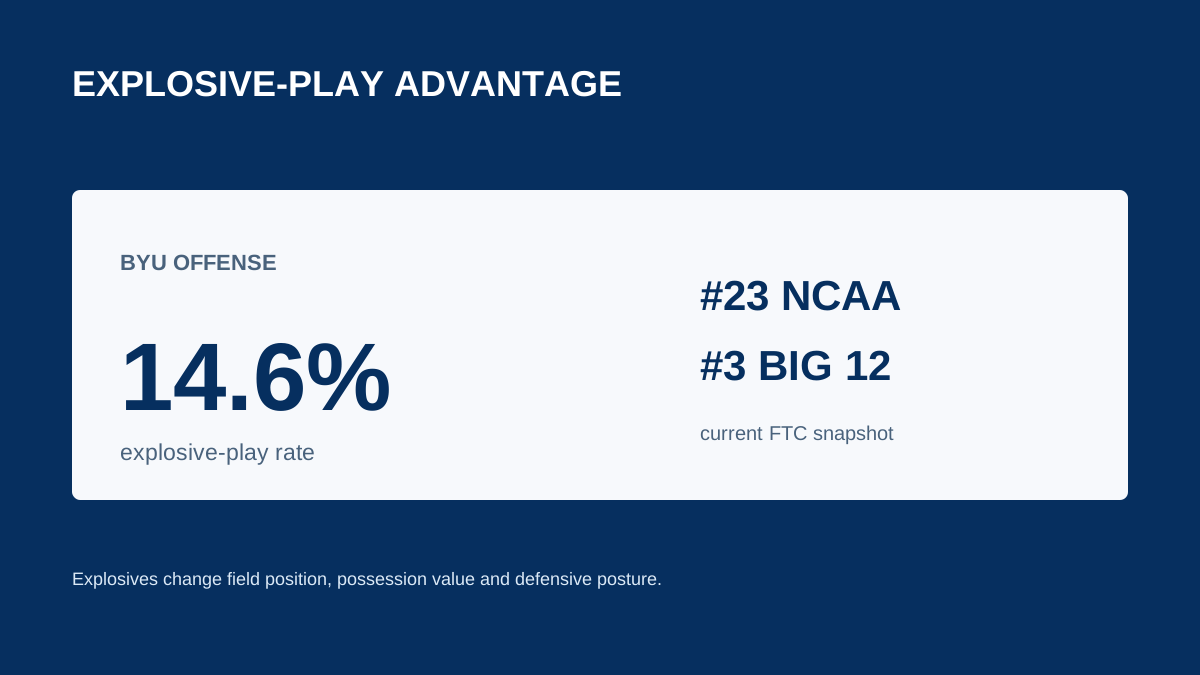
Explosive plays are not the whole offense, but BYU’s 14.6 percent rate explains why the Cougars can change a game before a defense has time to settle in.
There is a difference between moving the ball and threatening the field. BYU has done both through three games, and the explosive-play number explains why. The FTC team board lists the Cougars at a 14.6 percent explosive-play rate, No. 23 nationally and No. 3 in the Big 12 comparison snapshot. That rate is not a claim that every drive becomes a highlight. It is a signal that a meaningful share of BYU’s successful plays are large enough to change the expected shape of a possession.
Explosive plays matter because football is a game of limited possessions. A 12-play drive can be impressive, but it also gives the defense 12 chances to create a negative play. A 35-yard gain does more than add yards. It changes field position, compresses the number of plays required to score and forces the defense to defend the next snap with a different emotional and tactical posture. BYU’s 6.2 yards per play and 31.4 points per game fit with that idea: the offense is not merely accumulating small gains.
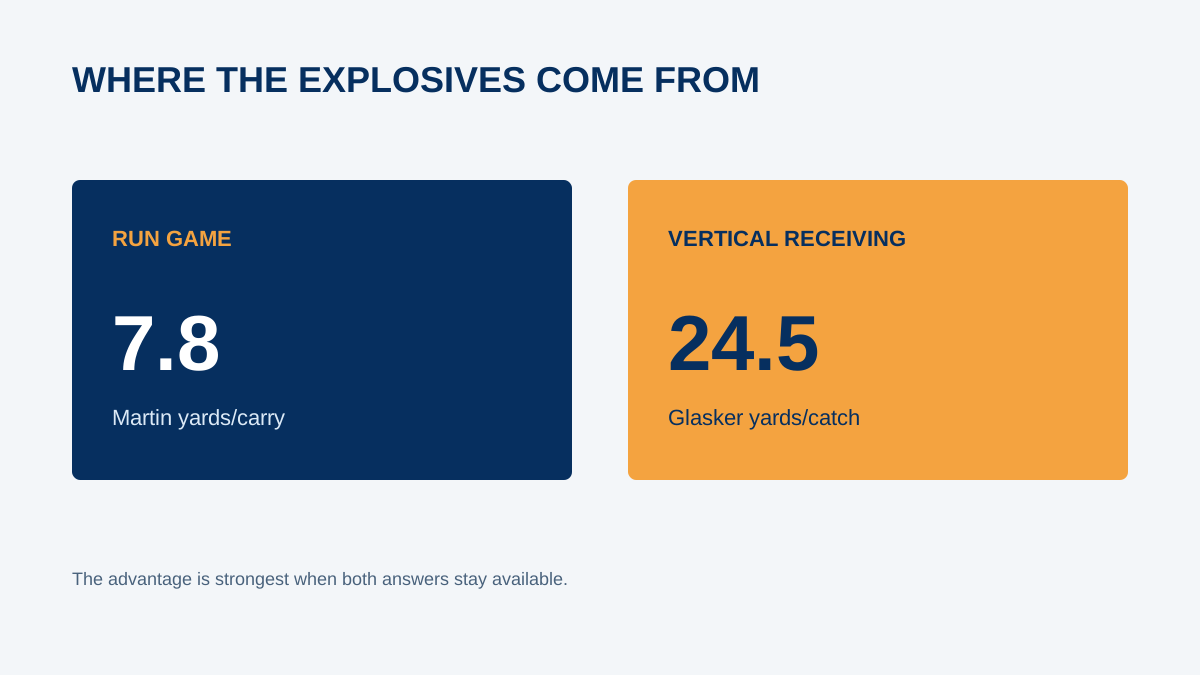
Legend Glasker is the most visible individual example. The current player feed credits him with 270 receiving yards on 11 catches, a 24.5-yard average. That is an explosive profile, but the responsibility does not belong to one receiver. Kyler Kasper, Walker Lyons and the rest of the room give BYU different ways to stretch coverage. LJ Martin’s 7.8-yard rushing average creates a second kind of explosive threat, one that can punish a defense for playing too light in the box.
The national rank needs context. Explosive-play rates can be sensitive to opponent quality, game script and the definition used by the source. FTC’s comparison board uses its published team-stat definitions, so the number is useful for tracking BYU against itself and the Big 12. It should not be confused with an official NCAA category unless the underlying provider says so. The value is in the trend: does BYU continue to create field-flipping plays when the opponent has enough speed to limit the easy answers?
There is a defensive mirror to this story. BYU’s explosive plays allowed rate is 10.8 percent, listed No. 30 nationally and No. 4 in the Big 12 snapshot. The best teams pair offensive aggression with defensive restraint. They take a chance when a matchup is favorable and refuse to give the opponent an equally cheap escape. That is why explosive-play margin is often more revealing than offensive explosive rate alone.
The next test is consistency. A team can post a strong early rate because of three or four huge gains. The longer season asks whether BYU can create explosives from different formations, against different coverages and after the defense has adjusted. Watch the down on which the play occurs, the field position it produces and whether the following snap turns the advantage into points. A 40-yard gain that ends in a field goal is different from a 40-yard gain that creates a touchdown two plays later.
BYU’s explosive-play advantage is therefore both a strength and a responsibility. It gives the offense a way to avoid playing every possession on hard mode. It gives the defense a standard for what cannot be surrendered. If the Cougars stay near the top quarter nationally in offensive explosives while keeping defensive explosives in check, the ranking résumé will have a durable foundation. The number is exciting because it is large. It is useful because it tells us what to watch next.
More BYU football originals
 Does BYU Have a Top-15 Offense? The Numbers Say YesRead the original →
 BYU’s First Three Weeks by the Numbers: What the Stats Say About This TeamRead the original →
 The CFP May Get Bigger. BYU’s Standard Against Notre Dame Shouldn’tRead the original →
Questions about a source, update or correction? Contact the editor. Story updates are reflected in the published timestamp above.