
FEED THE COUGAR ORIGINAL · Football
BYU’s First Three Weeks by the Numbers: What the Stats Say About This Team
The first three games have produced a clearer BYU profile than a simple 3–0 record can show. Here are the numbers that explain what is real, what is still fragile and what matters next.

A record tells you where BYU stands. The first three weeks tell you how it got there. That distinction matters because the Cougars have not played three versions of the same game. Utah Tech tested whether BYU would handle an inferior opponent without losing focus. Arizona tested the offense in a tighter, more physical game. Colorado State tested whether the team could carry its efficiency into a road setting. The numbers do not describe a finished team, but they do point to a recognizable one: explosive enough to create separation, disciplined enough to avoid giving games away and still searching for a complete national profile.
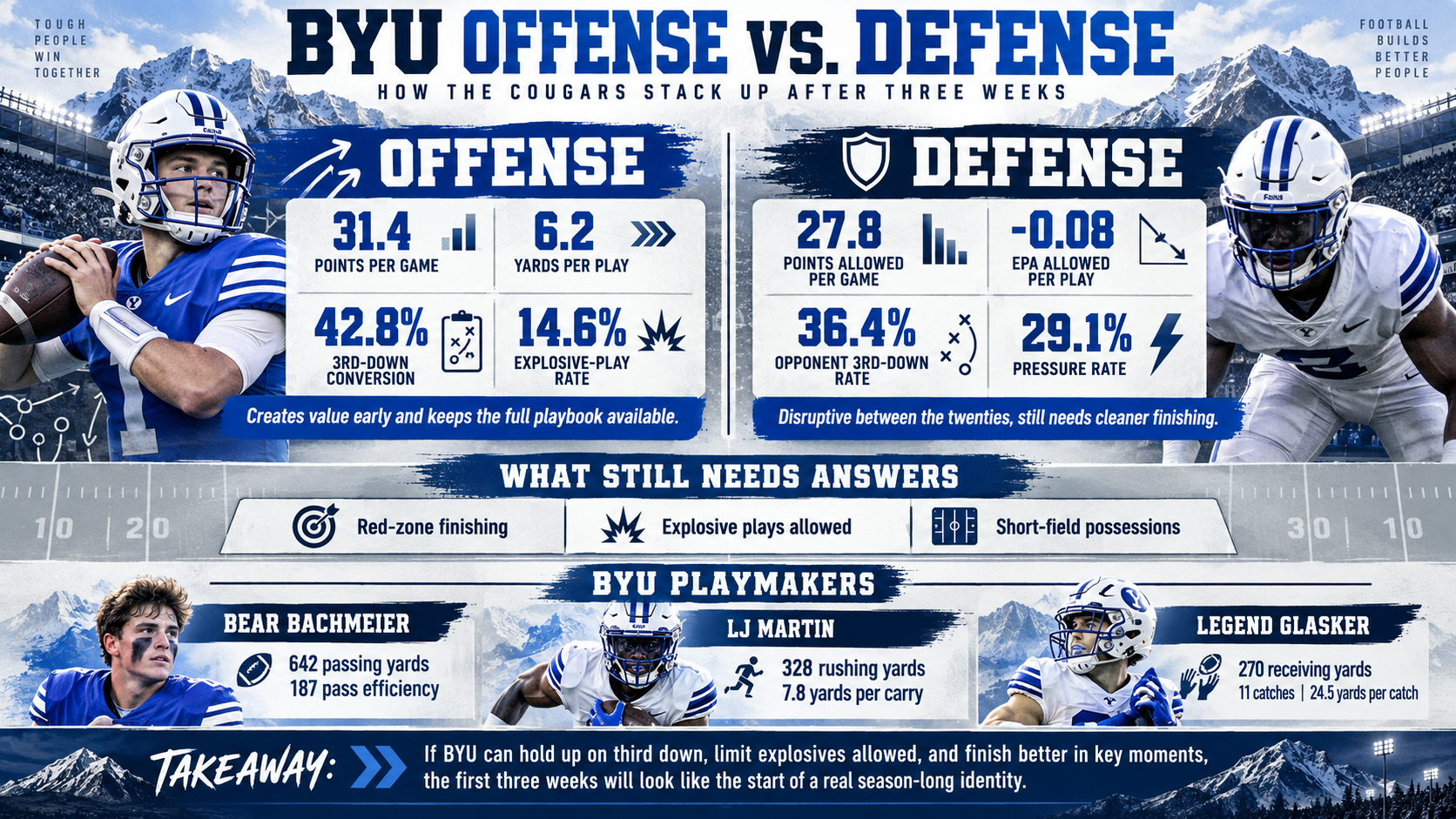
The FTC Stats Room has BYU at 31.4 points per game, 6.2 yards per play and a 42.8 percent third-down conversion rate. Those are not decorative numbers. They describe an offense that is creating enough value before the chains become desperate. The third-down number is especially important because it is the bridge between good early-down execution and sustained possessions. When BYU stays ahead of the sticks, Bear Bachmeier can use the whole call sheet and LJ Martin can remain part of the plan instead of being asked to rescue a drive from second-and-long.
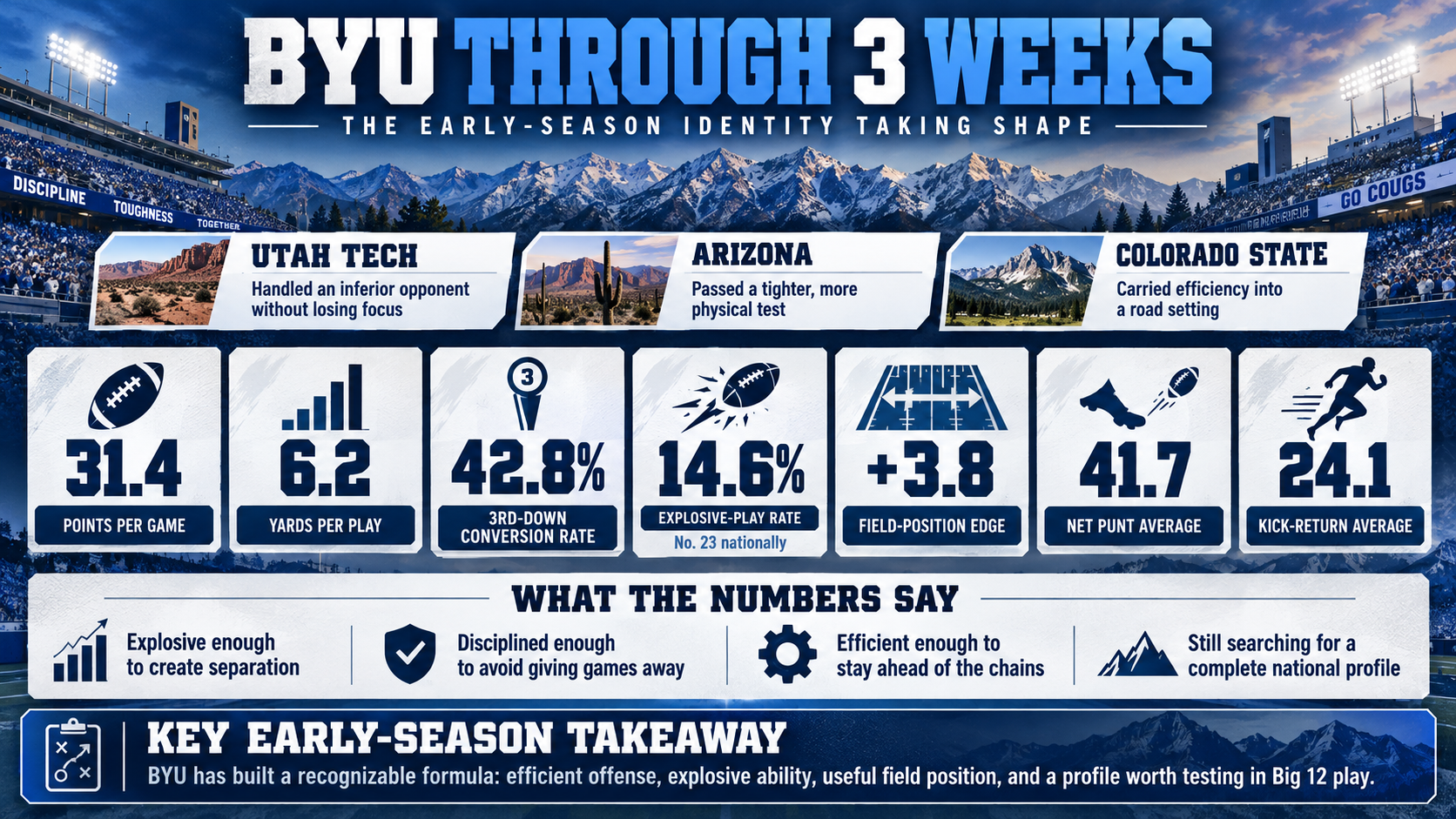
The best offensive number may be the explosive-play rate, listed at 14.6 percent and No. 23 nationally on the current FTC comparison snapshot. Explosives change the emotional temperature of a game, but they also change the math. A 12-play drive can die on one negative play; a 45-yard gain can erase three ordinary downs. BYU has created enough of those swings to make opponents defend the entire field. The next question is whether the Cougars can keep producing them when a Big 12 opponent has the athletes and scheme to take away the first answer.
Defense is more complicated. BYU is allowing 27.8 points per game, which is not a number that belongs in a victory lap by itself. The underlying measures are more encouraging: minus-0.08 EPA allowed per play, a 36.4 percent opponent third-down rate and a 29.1 percent pressure rate. That combination says the defense is doing useful work between the twenties and creating enough disruption to make drives earn every yard. It also says the next step is finishing. Red-zone snaps, explosive plays allowed and short-field possessions will tell us whether the points-per-game number is a temporary blemish or a structural problem.
Field position has quietly tilted BYU’s way. The current board shows a plus-3.8 field-position edge, a 41.7 net punt average and a 24.1-yard kick-return average. Those numbers are not as shareable as a touchdown total, but they shorten the field for the offense and lengthen it for the defense. A team that consistently starts drives near midfield does not have to be perfect to score. A team that forces opponents to travel 70 or 80 yards has more chances to win a down, create pressure and make a fourth-quarter possession matter.
The player numbers add texture. Bachmeier has 642 passing yards and a listed pass-efficiency mark of 187 on the current BYU feed. Martin has 328 rushing yards on 42 carries, or 7.8 yards per carry. Legend Glasker leads the receiving room with 270 yards on 11 catches, a 24.5-yard average that explains why defenses cannot treat him as a short-area possession receiver. None of those numbers should be detached from opportunity or opponent, but together they show an offense with multiple ways to get vertical.
Three weeks also expose what the numbers cannot settle yet. BYU has not accumulated enough comparison data for every player to receive a Big 12 or national rank, and the team’s strength-of-schedule story is still developing. The national snapshot can move quickly once conference play fills the comparison field. That is why the most honest early-season conclusion is not that BYU has solved every problem. It is that the Cougars have built a profile worth testing: efficient offense, useful pressure, valuable field position and enough explosive ability to make a narrow game turn suddenly.
The next checkpoint is not simply the next win. It is whether those four traits travel together when the opponent can answer back. Watch third down, explosive plays allowed, red-zone finishing and the number of drives that begin outside the offense’s preferred field position. If BYU remains above water in those categories, the first three weeks will look less like a soft opening and more like the beginning of a legitimate season-long identity.
More BYU football originals
 BYU’s Bye-Week To-Do List: The 3 Numbers That Need FixingRead the original →
 BYU’s National Ranking Resume: What Improves—and What Still Needs WorkRead the original →
 The CFP May Get Bigger. BYU’s Standard Against Notre Dame Shouldn’tRead the original →
Questions about a source, update or correction? Contact the editor. Story updates are reflected in the published timestamp above.