
FEED THE COUGAR ORIGINAL · Football
BYU’s Bye-Week To-Do List: The 3 Numbers That Need Fixing
BYU enters the bye week 3–0 with plenty working, but three defensive numbers stand out: third-down defense, sacks and red-zone efficiency. Here’s where the Cougars are falling short statistically, why those issues matter, and what needs to improve before Big 12 play gets tougher.
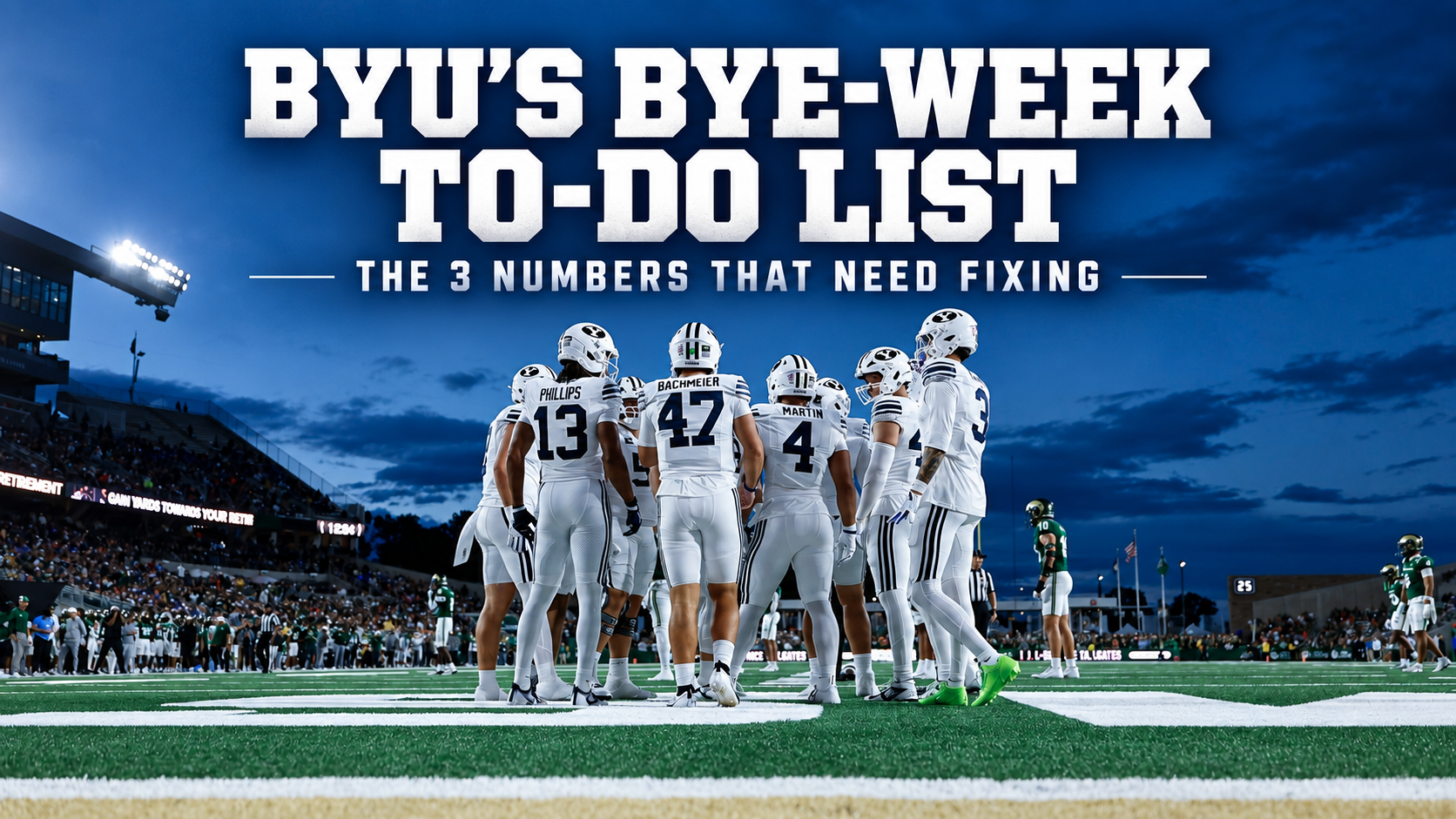
BYU enters its bye week 3–0, ranked in the top 10 and averaging 44 points per game. The Cougars are also allowing only 15.7 points and 271 yards per game, so this is not a team searching for major answers on either side of the football. Instead, the numbers point toward three specific areas where a very good team still has room to become considerably more efficient.
The encouraging part is that BYU’s problems are mostly situational. Opponents are averaging only 4.4 yards per play, BYU is surrendering just 76 rushing yards per game, and the defense has already produced five interceptions. The Cougars are winning most downs; the issue is that they have not consistently finished drives when the opportunity presents itself. That makes the bye-week priorities fairly clear: third-down defense, finishing the pass rush and tightening up inside the red zone.
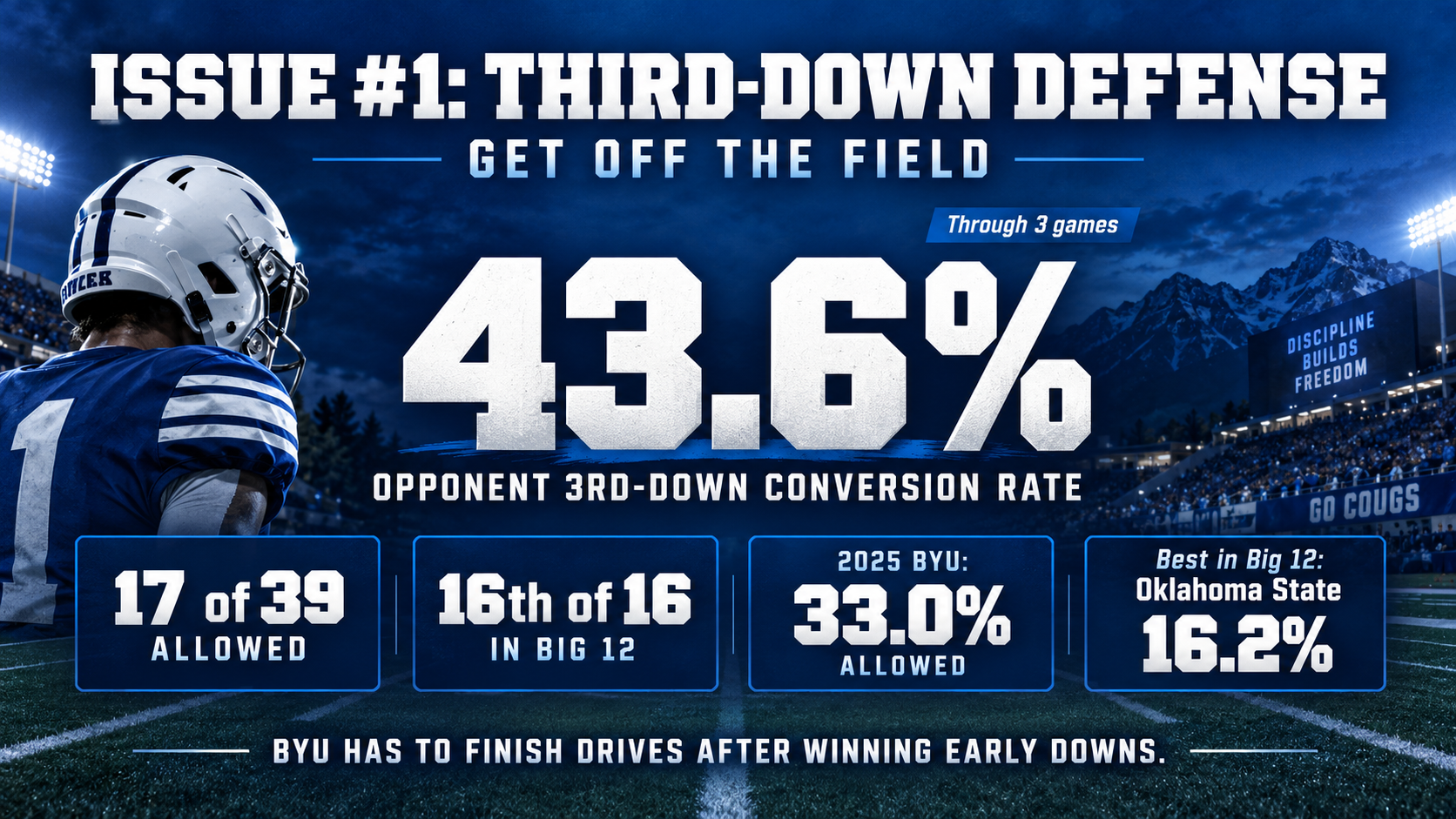
1. BYU Has to Get Off the Field on Third Down
This is BYU’s most obvious statistical weakness through three games. Opponents have converted 17 of 39 third downs, a 43.6% success rate, which ranks last in the Big 12. That is a surprising number for a defense that has otherwise been difficult to move the football against.
The problem becomes even more noticeable when compared with BYU’s 2025 defense. Last season, opponents converted roughly 33% of their third downs, putting BYU among the better third-down defenses nationally. Through three games this year, that rate has jumped by more than 10 percentage points despite the Cougars still performing well in most other defensive categories.
The situational breakdown is important because BYU is not simply getting carved up on third-and-long. The Cougars have generally been better when opponents face seven yards or more, while much of the damage has come in the short and intermediate ranges. That points toward tackling at the sticks, defending underneath routes, quarterback containment and short-yardage run fits as the more immediate issues.
That distinction matters because BYU is often doing the hard part correctly. The defense creates second-and-long, forces an incompletion or stuffs a run, then suddenly allows third-and-5 to become another set of downs. Against Utah Tech or Colorado State, BYU has had enough margin elsewhere to survive those mistakes, but conference games are going to give the Cougars fewer opportunities to recover. A defense allowing only 271 yards per game should not be last in the Big 12 in third-down percentage.
If BYU can move that 43.6% rate closer to last season’s 33%, the effect goes well beyond one statistical category. Fewer conversions mean fewer plays, fewer red-zone opportunities for opponents, better field position for the offense and less wear on the defense late in games. It may be the single most valuable correction BYU can make during the bye.
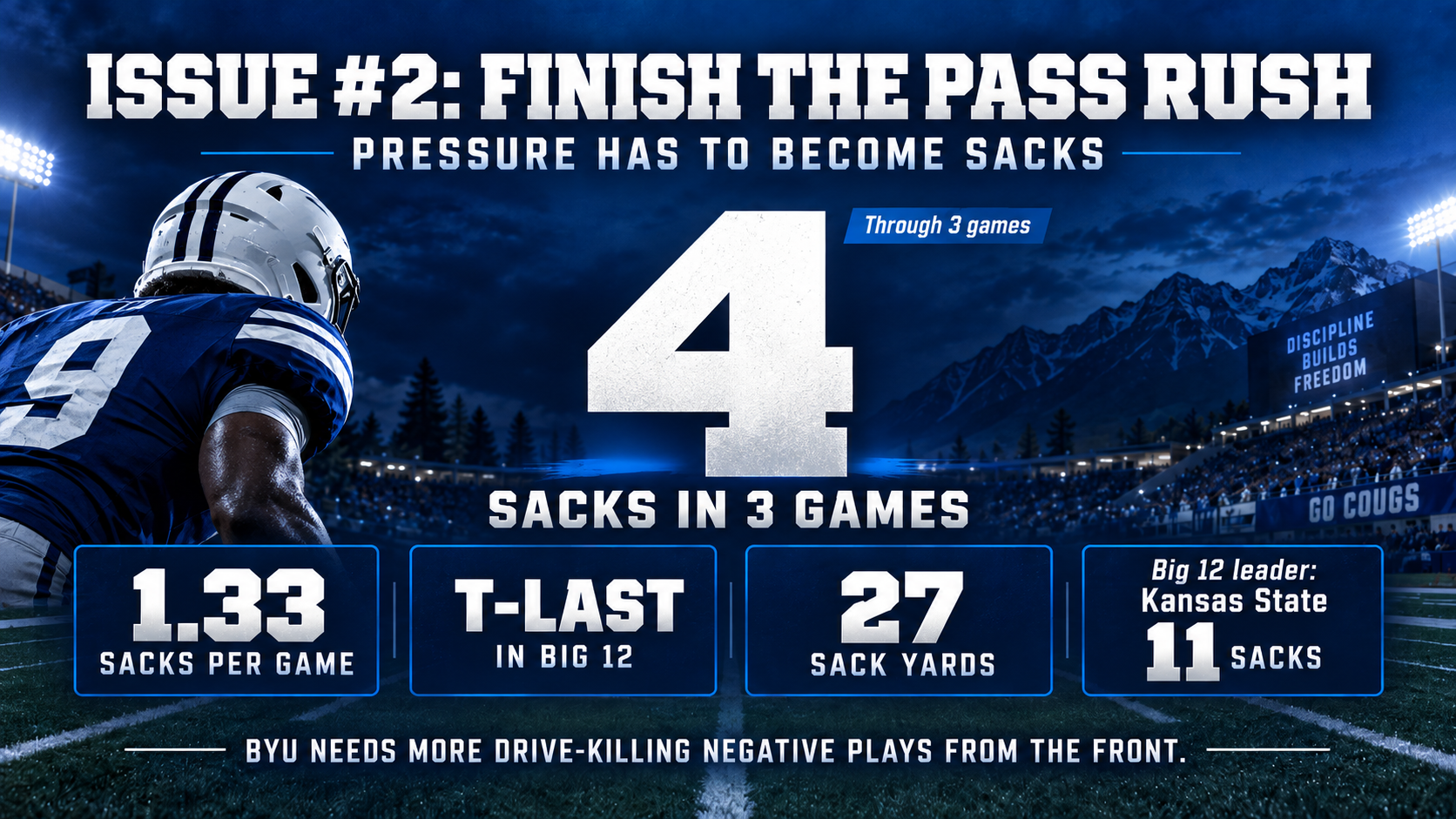
2. Pressure Needs to Turn Into Sacks
BYU’s second concern is more surprising: the Cougars have recorded only four sacks through three games, or 1.33 per game. That puts BYU near the bottom of the Big 12 while several conference opponents have already reached nine, 10 or even 11 sacks. For a defense with BYU’s talent and overall production, four sacks feels remarkably low.
The important distinction is that BYU’s defensive front has not been ineffective. The Cougars have been disruptive against the run, are producing tackles for loss and have held opponents to fewer than three yards per rushing attempt. The problem is that too many pressures are ending with the quarterback escaping, checking the ball down or simply throwing it away instead of losing yardage.
That changes the math of a possession. A quarterback throwing the ball away on first down creates second-and-10, while an eight-yard sack creates second-and-18 and gives the defense a much larger advantage. On third down, the difference becomes even bigger because an almost-sack that turns into a short completion can extend a drive that should have ended.
There is also an obvious connection between BYU’s sack total and its third-down problems. If opposing quarterbacks have enough time to escape pressure or find a receiver underneath, even good coverage can eventually break down. Converting two or three more pressures into sacks could improve BYU’s third-down defense without requiring dramatic schematic changes.
That should make pass-rush finishing a major bye-week emphasis. BYU can work on rush-lane discipline, closing escape routes, finishing quarterbacks in space and coordinating pressures so that one defender flushes the quarterback toward another rather than allowing him to escape cleanly. The pressure is getting there. Now BYU needs the negative plays to follow.
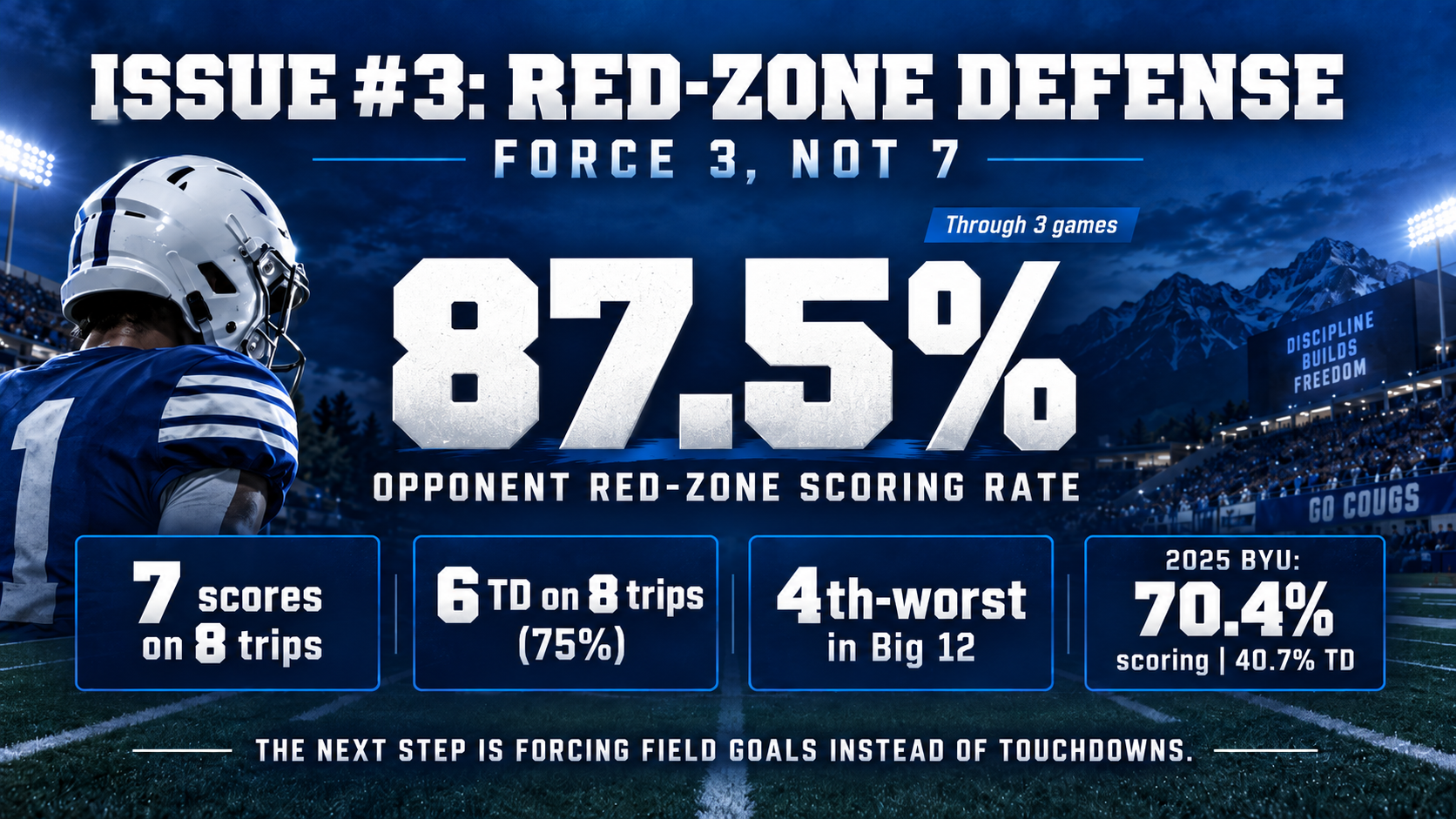
3. The Red-Zone Defense Needs to Look More Like 2025
BYU has actually done an excellent job keeping opponents away from the red zone. Through three games, opposing offenses have reached the BYU 20-yard line only eight times, which reinforces how well the defense has played between the 20s. The problem is what happens once opponents finally get there.
Teams have scored on seven of those eight possessions, an 87.5% scoring rate, while six of the eight trips have ended with touchdowns. That gives BYU a 75% red-zone touchdown rate allowed, a much different profile from the defense the Cougars fielded last season. In 2025, BYU allowed red-zone touchdowns on only about 41% of opponent possessions, one of the best marks in the country.
Eight possessions is admittedly a small sample, so BYU’s current percentage could change quickly. Two red-zone stops over the next few games would move the number dramatically, which is why this should not be treated as evidence of a fundamentally bad red-zone defense. It is better viewed as an early warning sign in an area where BYU already knows what successful defense looks like.
The encouraging part is that BYU does not need to prevent every red-zone score. It simply needs to force more field goals. Turning two of the six touchdowns BYU has surrendered into field goals would erase eight points from the scoreboard, which is often the difference between controlling a conference game and needing a final possession to win it.
The red zone also compresses the field and changes what offenses can do, making communication and tackling even more important. Routes develop faster, quarterback runs become more dangerous and one missed assignment can turn into six points immediately. BYU was excellent in those situations last season, so recreating that discipline should be attainable.
BYU’s Problems Are About Finishing, Not Rebuilding
This bye week is different because BYU is not dealing with a major offensive or defensive failure. BYU does not need to overhaul its scheme, rediscover its running game or figure out how to stop opponents from moving the football. The Cougars are already averaging 481.7 yards of offense while holding opponents to 271, and they have consistently controlled the line of scrimmage.
What BYU needs is greater efficiency in the moments that decide possessions. Get the opponent to third down and finish the drive. Create pressure and finish the sack. Allow an opponent into the red zone and finish the possession by forcing three points instead of seven.
Those improvements reinforce each other. More sacks create longer third downs, better third-down defense prevents red-zone opportunities, and stronger red-zone defense limits the damage when an opponent does sustain a drive. BYU does not have to become dramatically better across the board to produce a noticeable jump defensively. The foundation is already there.
If the Cougars can drag their 43.6% third-down rate closer to last season’s 33%, increase a four-sack total that currently sits near the bottom of the Big 12 and pull the 75% red-zone touchdown rate back toward BYU’s 2025 standard, this team could return from the bye looking much more complete.
The opportunity is clear. The first three games have shown that the Cougars can dominate stretches of football; the next step is making sure good defensive possessions actually end the way they should.
More BYU football originals
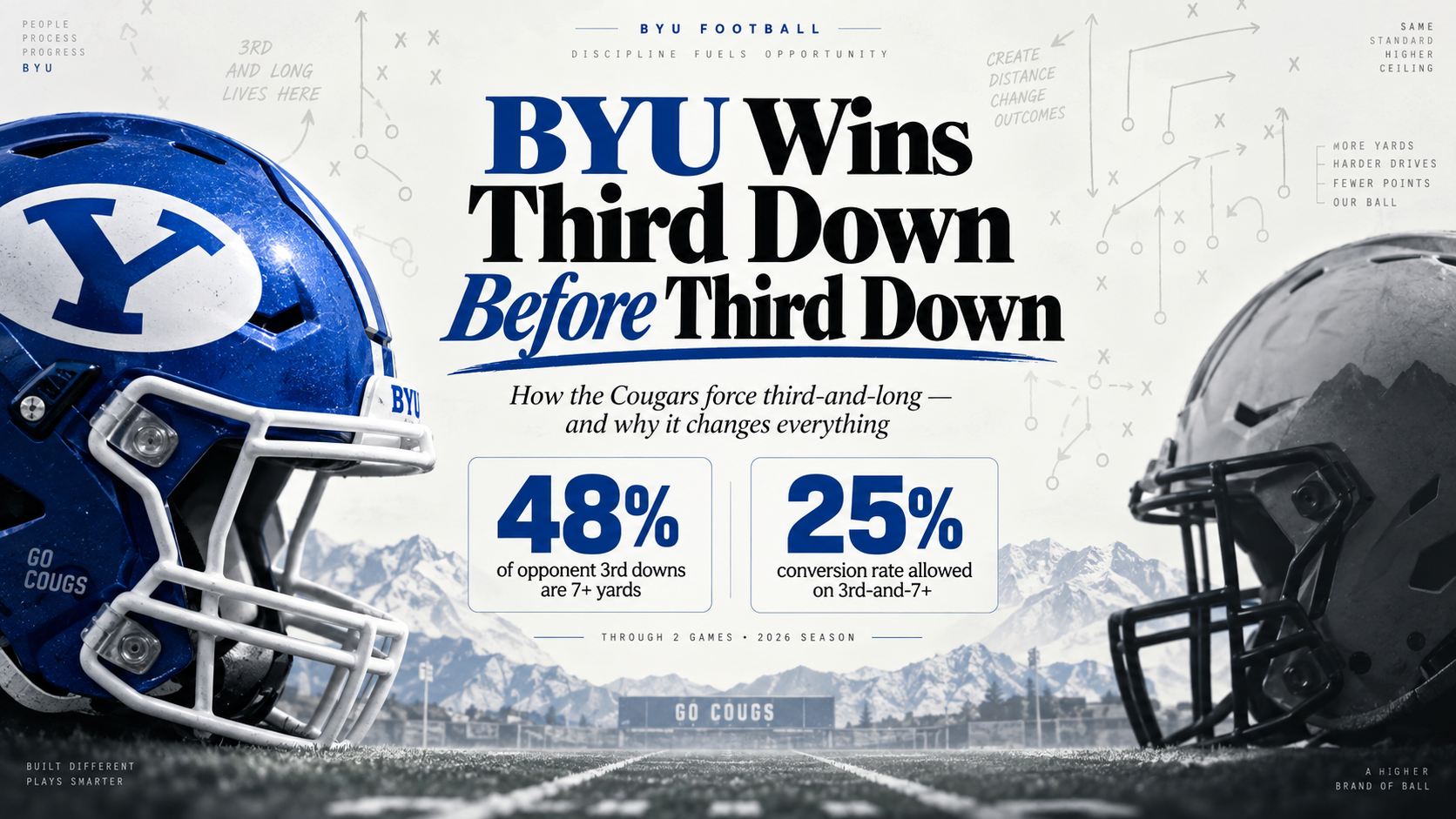 Why 3rd-and-Long Is Fueling BYU’s Defensive SuccessRead the original →
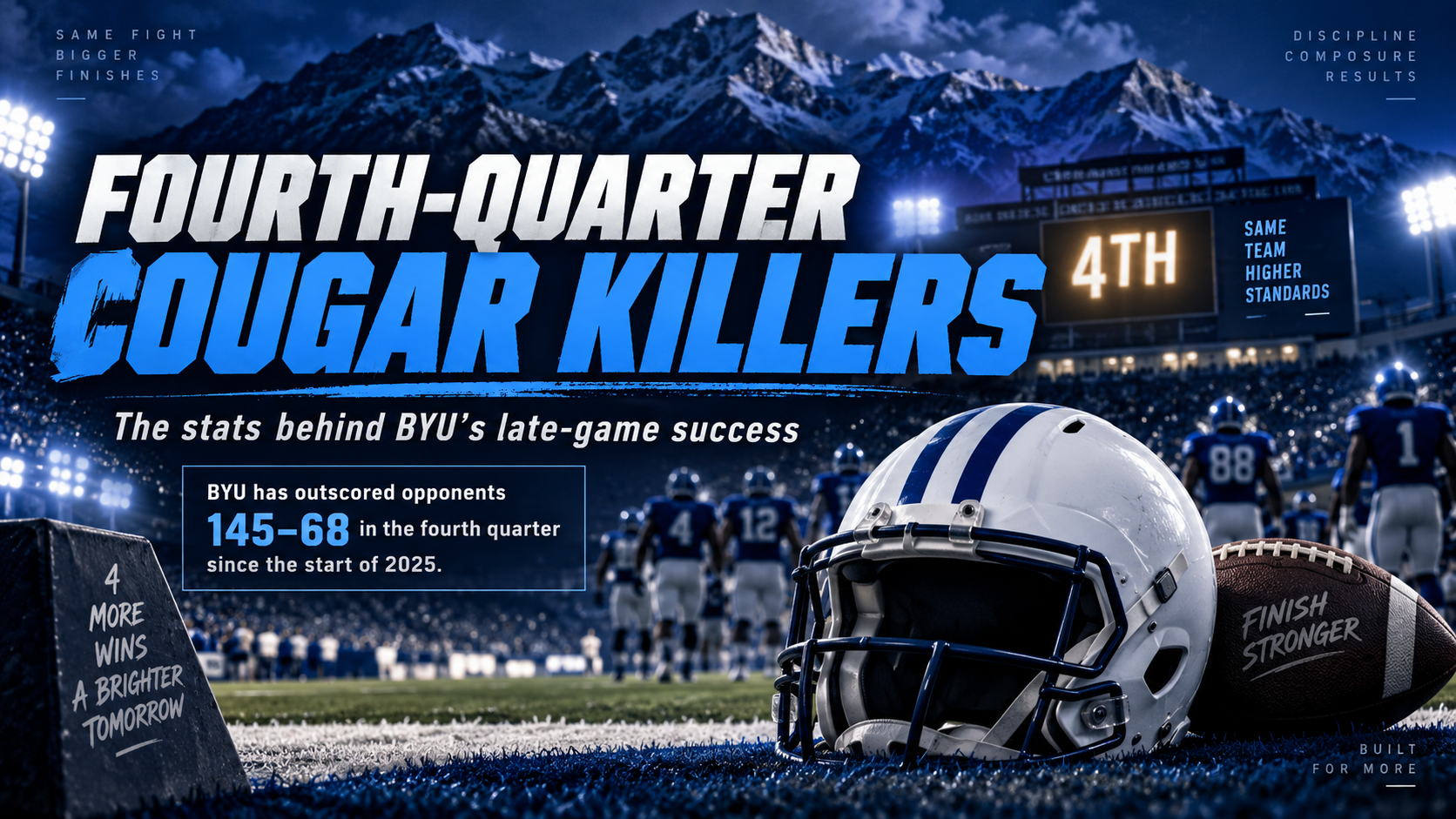 The Fourth-Quarter Cougar Killers: The Stats Behind BYU’s Late-Game SuccessRead the original →
 The CFP May Get Bigger. BYU’s Standard Against Notre Dame Shouldn’tRead the original →
Questions about a source, update or correction? Contact the editor. Story updates are reflected in the published timestamp above.