
FEED THE COUGAR ORIGINAL · Football
The Fourth-Quarter Cougar Killers: The Stats Behind BYU’s Late-Game Success
BYU has become one of college football’s best fourth-quarter teams. Since the start of 2025, the Cougars have outscored opponents 145-68 in the fourth quarter, with Texas Tech the only team to outscore BYU in the final period. The numbers show a team that has evolved from surviving close games to consistently finishing them.
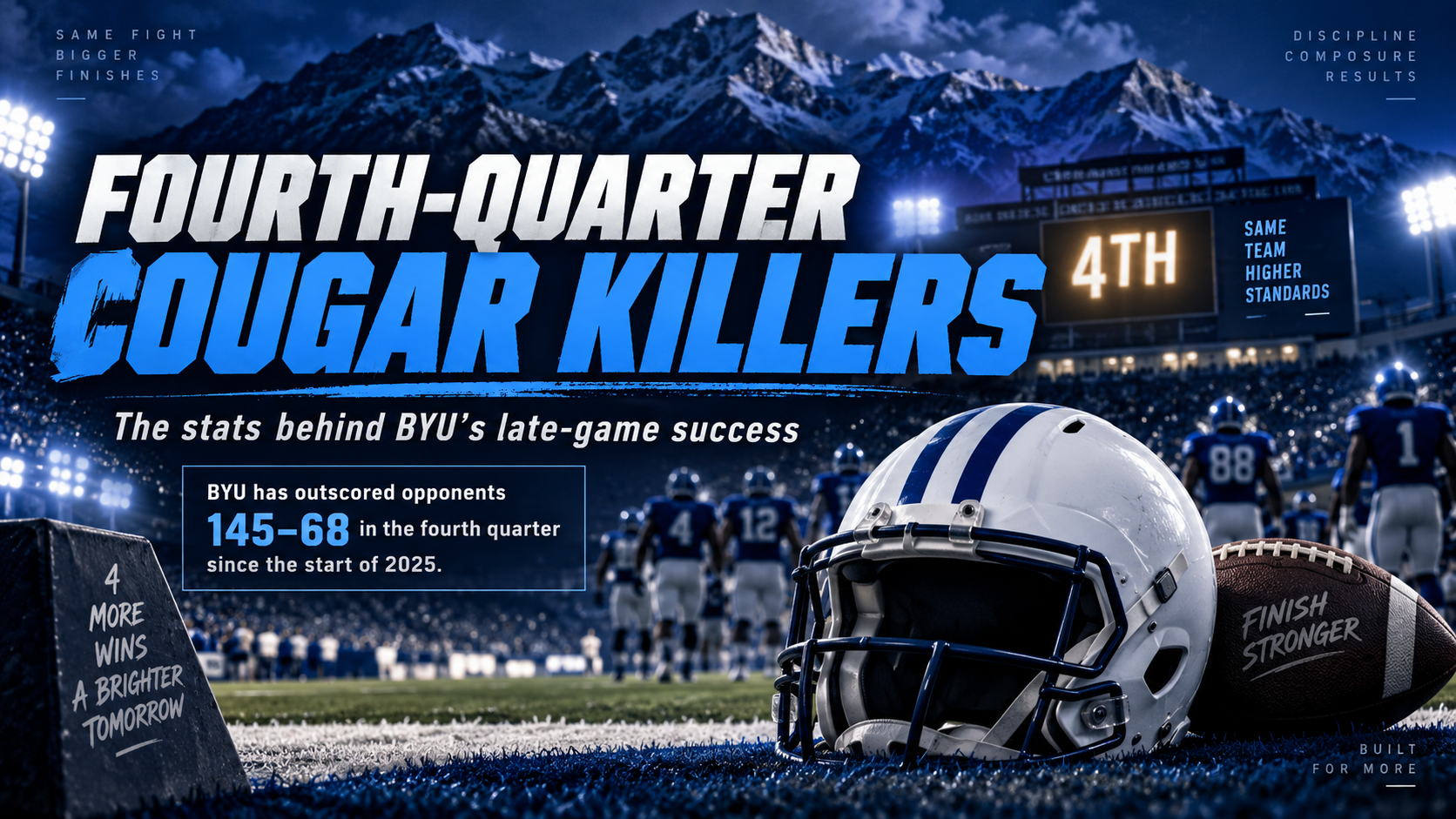
There is something different about BYU when the clock flips to the fourth quarter. It isn't simply that the Cougars have won a lot of football games. BYU went 11-2 in 2024, followed it with a 12-2 season in 2025 and has opened 2026 at 2-0. That is a 25-4 record over its last 29 games, one of the strongest stretches in recent program history.
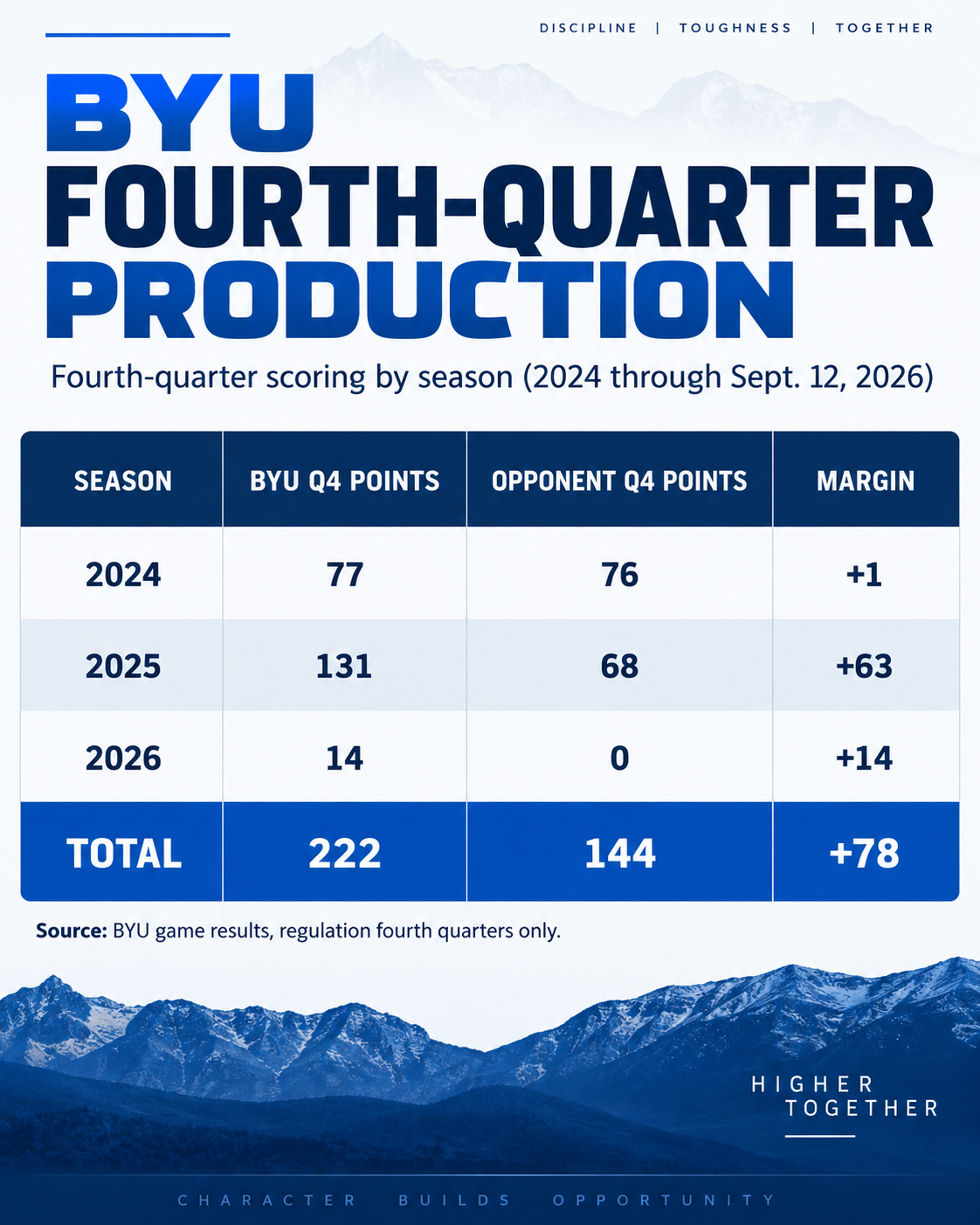
But buried inside those 25 victories is a statistic that may explain part of why BYU has become so difficult to beat. The Cougars have become fourth-quarter killers. From the beginning of the 2024 season through BYU's 28-17 victory over Arizona on September 12, 2026, BYU has outscored opponents 222-144 in the fourth quarter.
That is a +78 scoring margin over 29 games. The more interesting part, however, is what has happened recently. | Season | BYU Q4 points | Opponent Q4 points | Margin | | --------- | ------------: | -----------------: | ------: | | 2024 | 77 | 76 | +1 | | 2025 | 131 | 68 | +63 | | 2026 | 14 | 0 | +14 | | Total | 222 | 144 | +78 |
The transformation started in 2025.
From surviving fourth quarters to owning them
BYU's 2024 season provided plenty of evidence that the Cougars could survive tight games, but statistically the fourth quarter itself was almost completely even. BYU scored 77 fourth-quarter points. Its opponents scored 76.
A one-point advantage over an entire 13-game season hardly screams domination. What 2024 did establish was BYU's ability to remain composed when games tightened late. The most obvious example came at Utah. BYU entered the fourth quarter trailing 21-13, shut Utah out over the final 15 minutes and scored nine unanswered points, including Will Ferrin's game-winning field goal with nine seconds remaining.
That ability to survive became something much more imposing the following season. In 2025, BYU outscored opponents 131-68 in fourth quarters. That is a +63 differential in only 14 games.
Instead of averaging roughly the same number of fourth-quarter points as its opponents, BYU averaged 9.4 points in the fourth quarter while allowing only 4.9. Then came 2026. Through Utah Tech and Arizona, the fourth-quarter score is: BYU 14, opponents 0. Put 2025 and 2026 together and the numbers become even more impressive. Over its last 16 games, BYU has outscored opponents 145-68 in fourth quarters. That is more than a 2-to-1 scoring advantage.
One opponent has cracked the formula
Perhaps the most remarkable statistic is not BYU's total point differential. It is the list of teams that have actually beaten BYU in a fourth quarter since the beginning of 2025. The list has one name: Texas Tech. It is it.
BYU has played 16 games since the beginning of the 2025 season. The Cougars have won the fourth quarter 11 times and tied it three more. The only two fourth quarters BYU has lost were against Texas Tech: 10-7 in Lubbock and 13-0 in the Big 12 Championship Game. Against everyone else during that stretch? BYU is 11-0-3 in fourth-quarter scoring.
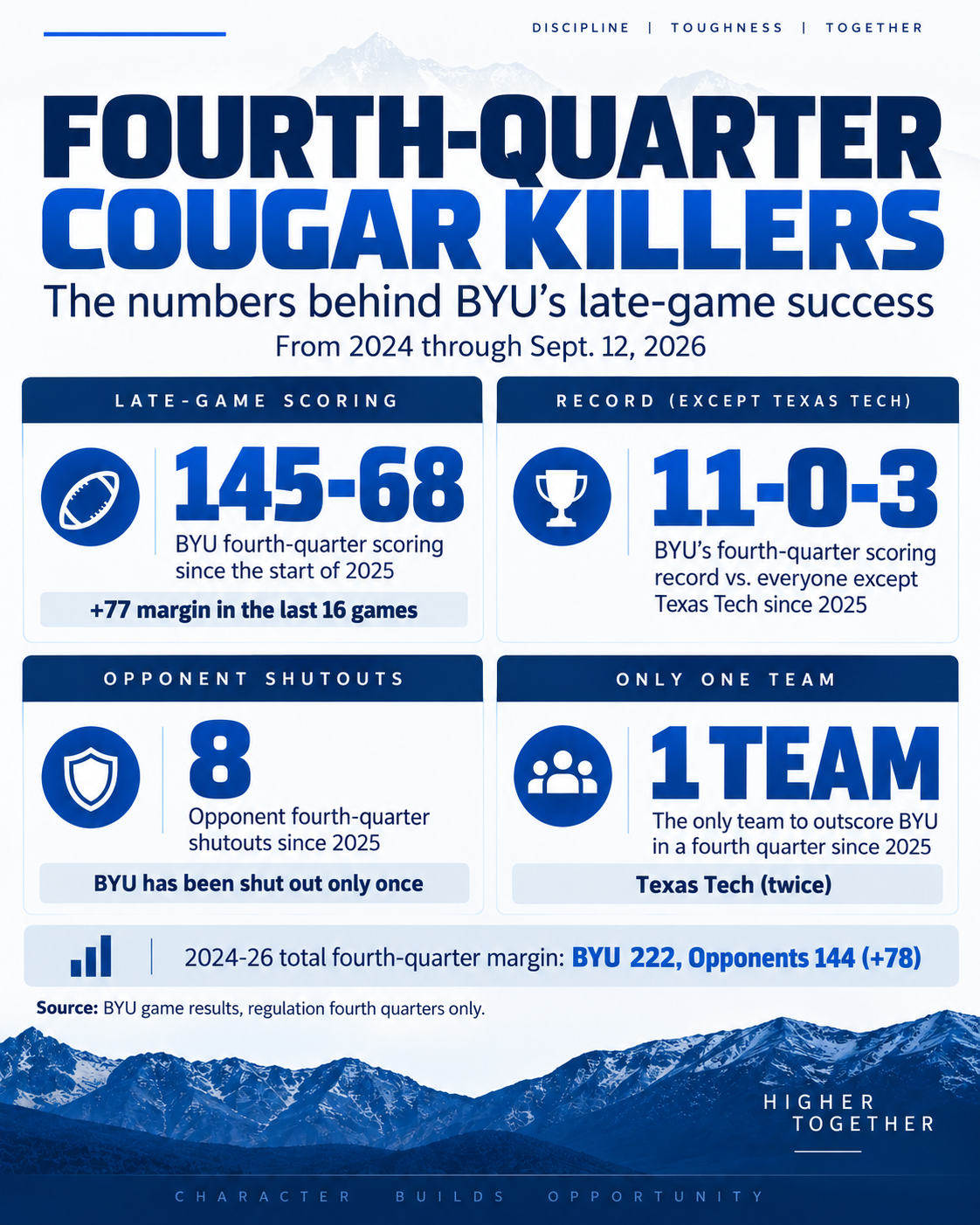
There is another way to frame it. Half of BYU's opponents since the beginning of 2025—eight of 16—have failed to score a single fourth-quarter point. BYU has been held scoreless in the fourth quarter just once over the same stretch. Texas Tech again.
The comebacks tell the story
The numbers matter because they have repeatedly changed games. At Colorado in 2025, BYU entered the fourth quarter trailing 21-17. The Cougars won the quarter 7-0 and left Boulder with a 24-21 victory.
Two weeks later at Arizona, BYU entered the fourth trailing 17-14. Arizona pushed the margin to 24-14, but BYU responded with 10 fourth-quarter points, tied the game with 24 seconds remaining and eventually won 33-27 in double overtime. BYU's own season review identified it as one of the defining comeback performances of the season. Then came perhaps the purest example in the Pop-Tarts Bowl.
Georgia Tech led BYU 21-10 entering the fourth quarter. BYU won the fourth quarter 15-0. Final score: BYU 25, Georgia Tech 21.
It was BYU's sixth comeback victory of the 2025 season and gave the Cougars their 12th win. That is not merely scoring when the opponent goes conservative. Those are fourth-quarter points directly changing who wins the football game.
Since the beginning of 2024, BYU has entered the fourth quarter trailing seven times. The Cougars are 4-3 in those games. For a team that has spent much of the last three seasons playing ranked opponents and Big 12 competition, winning more than half the games in which it trails after three quarters is significant.
Arizona showed the formula hasn't changed
BYU's 2026 Big 12 opener against Arizona looked like another test. Arizona led 17-14 at halftime. BYU's offense had been pushed around at times, Noah Fifita had moved the Wildcats effectively, and Arizona appeared capable of turning the game into another shootout.
It never happened. BYU shut Arizona out 14-0 in the second half, including 7-0 in the fourth quarter. With the score 21-17, BYU's defense stopped Arizona on fourth down. The offense responded with an 82-yard touchdown drive highlighted by a 61-yard Bear Bachmeier-to-Legend Glasker completion and a 12-yard touchdown pass to Kyler Kasper.
BYU then finished the game without allowing Arizona another point. That sequence is becoming familiar. Defense gets a stop.
The offense responds. The opponent presses. BYU closes the game.
Why the fourth quarter matters
Fourth-quarter scoring isn't a perfect measure of how good a football team is. Blowouts can produce garbage-time touchdowns. Backups play. Teams protecting big leads become conservative. But over 29 games, those effects begin to balance out.
And BYU's recent numbers are too large to dismiss. Over the entire period, the Cougars have held opponents scoreless in the fourth quarter 12 times. BYU itself has been shut out in the fourth only four times.
Since the start of 2025, the difference has become even more dramatic: eight opponent fourth-quarter shutouts versus one for BYU. That speaks to something deeper than offensive production.
It suggests conditioning. Defensive depth. Halftime adjustments. A running game capable of shortening games. Quarterbacks willing to make plays under pressure. And perhaps most importantly, a team that appears increasingly comfortable when the scoreboard gets uncomfortable. BYU's rise over the past three seasons has been explained through defense, turnovers, quarterback play and an increasingly physical roster. Add another statistic to the list. When the fourth quarter begins, BYU isn't simply trying to hang on anymore. The Cougars are finishing people off.
More BYU football originals
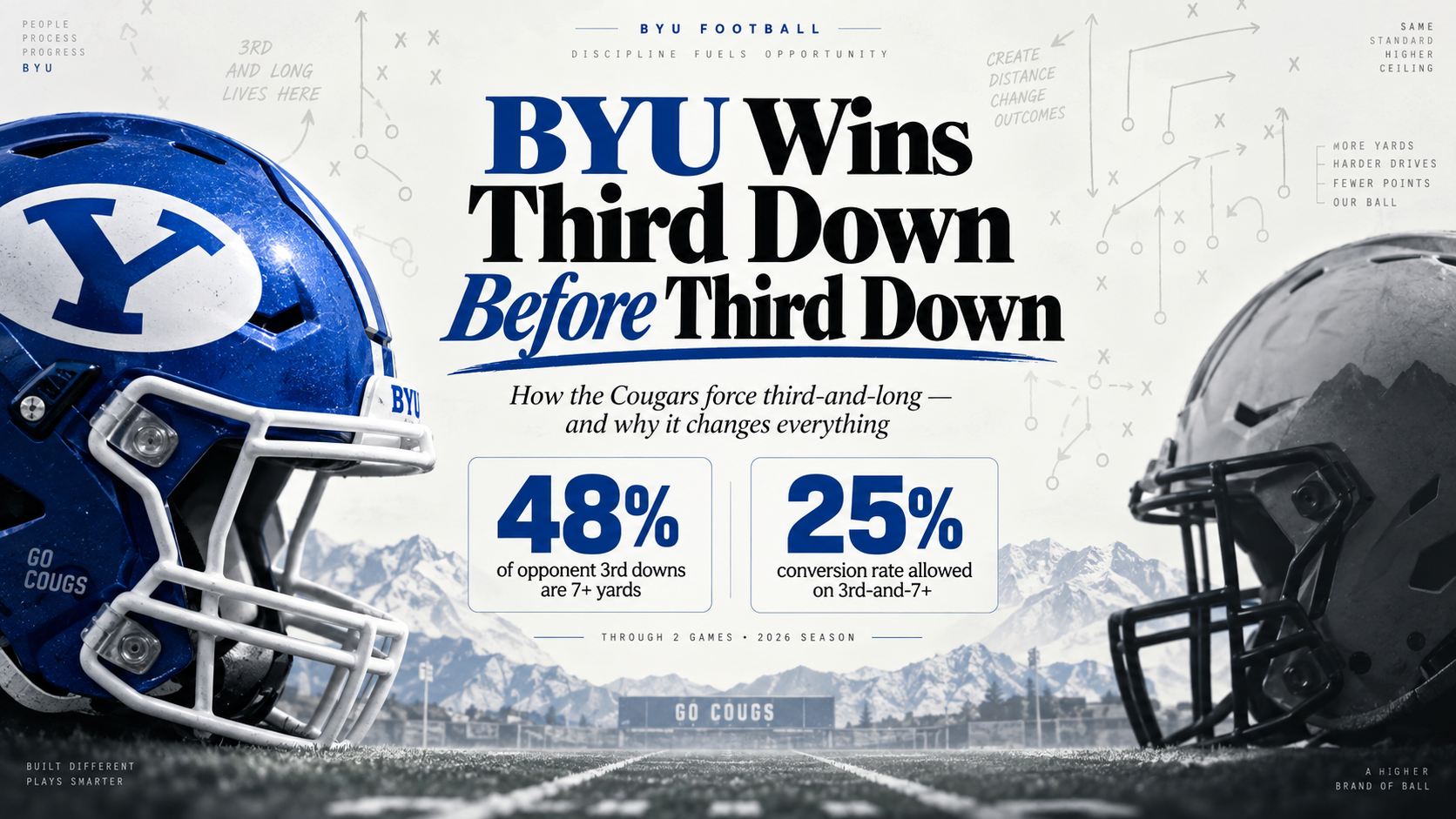 Why 3rd-and-Long Is Fueling BYU’s Defensive SuccessRead the original →
 Cardiac Cougars: The Numbers Behind BYU’s Late-Game NerveRead the original →
 The CFP May Get Bigger. BYU’s Standard Against Notre Dame Shouldn’tRead the original →
Questions about a source, update or correction? Contact the editor. Story updates are reflected in the published timestamp above.