
FEED THE COUGAR ORIGINAL · Football
BYU’s National Ranking Resume: What Improves—and What Still Needs Work
BYU has a credible early profile, but the national résumé has both strong evidence and unfinished business. Here is what the numbers already support and what the Cougars must prove next.
A national ranking is a summary judgment. A résumé is the evidence underneath it. Through three weeks, BYU’s résumé has enough substance to deserve attention, but not enough volume to end every argument. The current FTC team board places the offense in useful national territory: 31.4 points per game, 6.2 yards per play, a 42.8 percent third-down conversion rate and a 14.6 percent explosive-play rate. The defense is more uneven on the surface, but its pressure, third-down and explosive-play numbers are better than the points-per-game line alone suggests.
The clearest strength is offensive efficiency with range. A 6.2-yard average per play and a 14.6 percent explosive-play rate mean BYU is not surviving on one narrow method. It can create a chunk gain, finish a drive or convert a difficult down. The national snapshot lists those figures around the top quarter of the field, with explosive-play rate at No. 23 and yards per play at No. 19. Those are not promises about November. They are proof that the offense has already established a statistical reason for voters and models to pay attention.
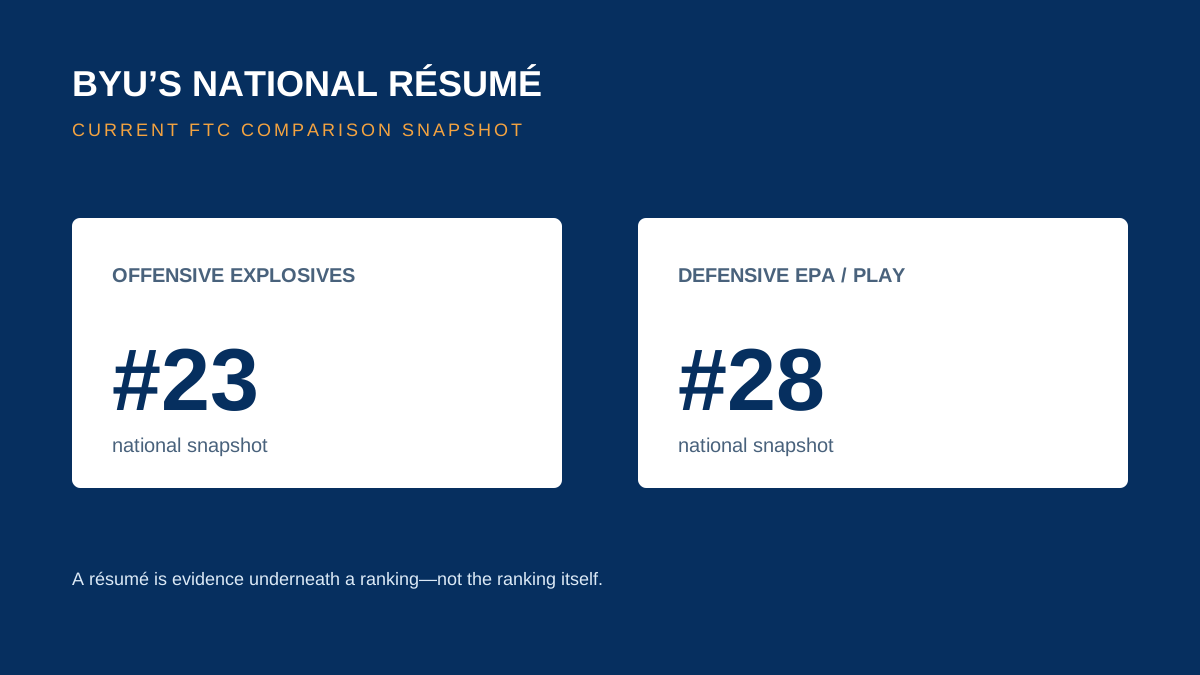
The defense supplies the résumé’s strongest counterargument and its most interesting upside. BYU’s 27.8 points allowed per game is listed No. 62 nationally, a number that will keep skeptics engaged. But EPA allowed per play is No. 28, opponent third-down conversion is No. 33 and explosive plays allowed is No. 30 in the current FTC comparison snapshot. That gap matters. It says the defense is doing many things well between the goal lines while still giving away enough scoring opportunities to keep the overall grade from becoming elite.
Field position and special teams help the case. BYU’s plus-3.8 field-position edge is listed No. 18 nationally, with kick-return average No. 19 and net punt average No. 29. Those categories rarely dominate a poll ballot, but they are exactly the margins that stabilize a team while the offense and defense continue to mature. A national résumé becomes persuasive when multiple units contribute to the same outcome: shorter offensive fields, longer defensive drives and fewer possessions that require perfection.
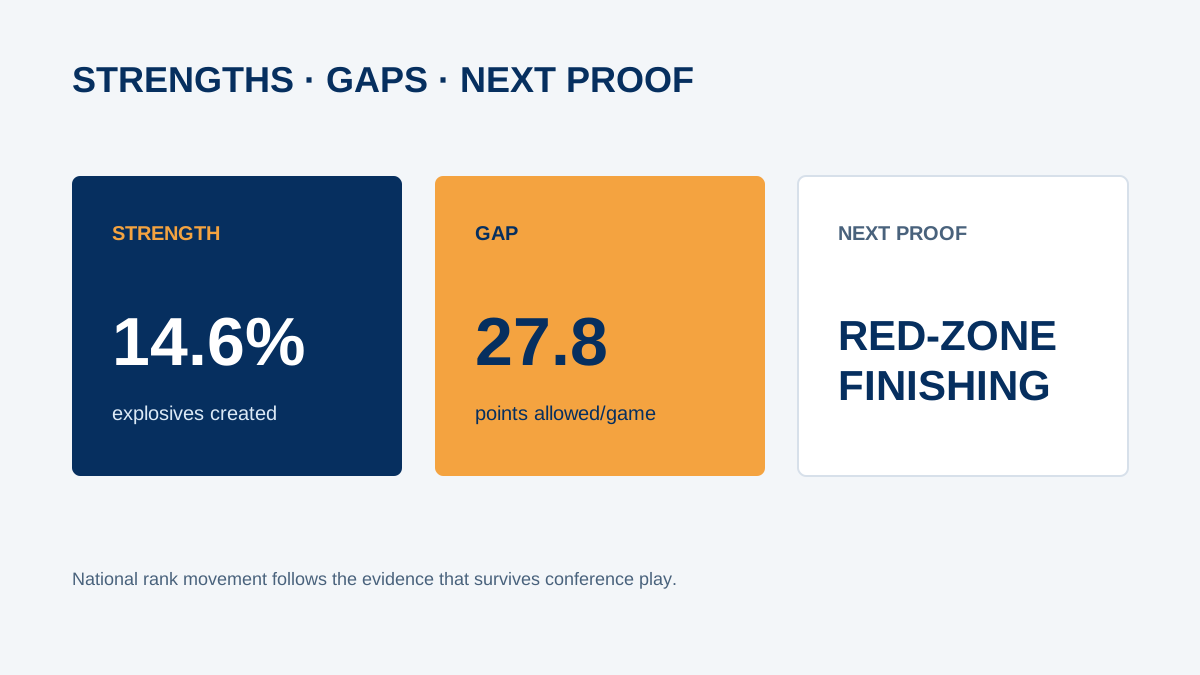
What still needs work is equally straightforward. BYU must prove it can prevent a long drive from becoming a crooked number, finish more consistently in the red zone and maintain its explosive-play advantage against a stronger conference schedule. The schedule will eventually supply more authoritative evidence than any early comparison table. Wins over respected opponents move the résumé faster than another efficient afternoon against an overmatched team.
The ranking conversation also needs humility. FTC’s national numbers are a comparison snapshot, not a replacement for an official poll or provider model. Some player categories do not yet have enough qualified data to produce a verified rank, and team numbers can shift as the national field fills in. That is why the most useful question is not whether BYU is exactly No. 17 or No. 21. It is whether the statistical profile is becoming harder to explain away. Right now, it is.
The next two weeks will decide which side of the résumé gets louder. If the offense keeps its efficiency while the defense lowers explosive mistakes, BYU’s ranking case will improve without needing a dramatic identity change. If points allowed and red-zone leakage remain elevated, the Cougars can still win while leaving voters unconvinced. The résumé is already good enough to start a national conversation. The next step is making every unit contribute to the same closing argument.
More BYU football originals
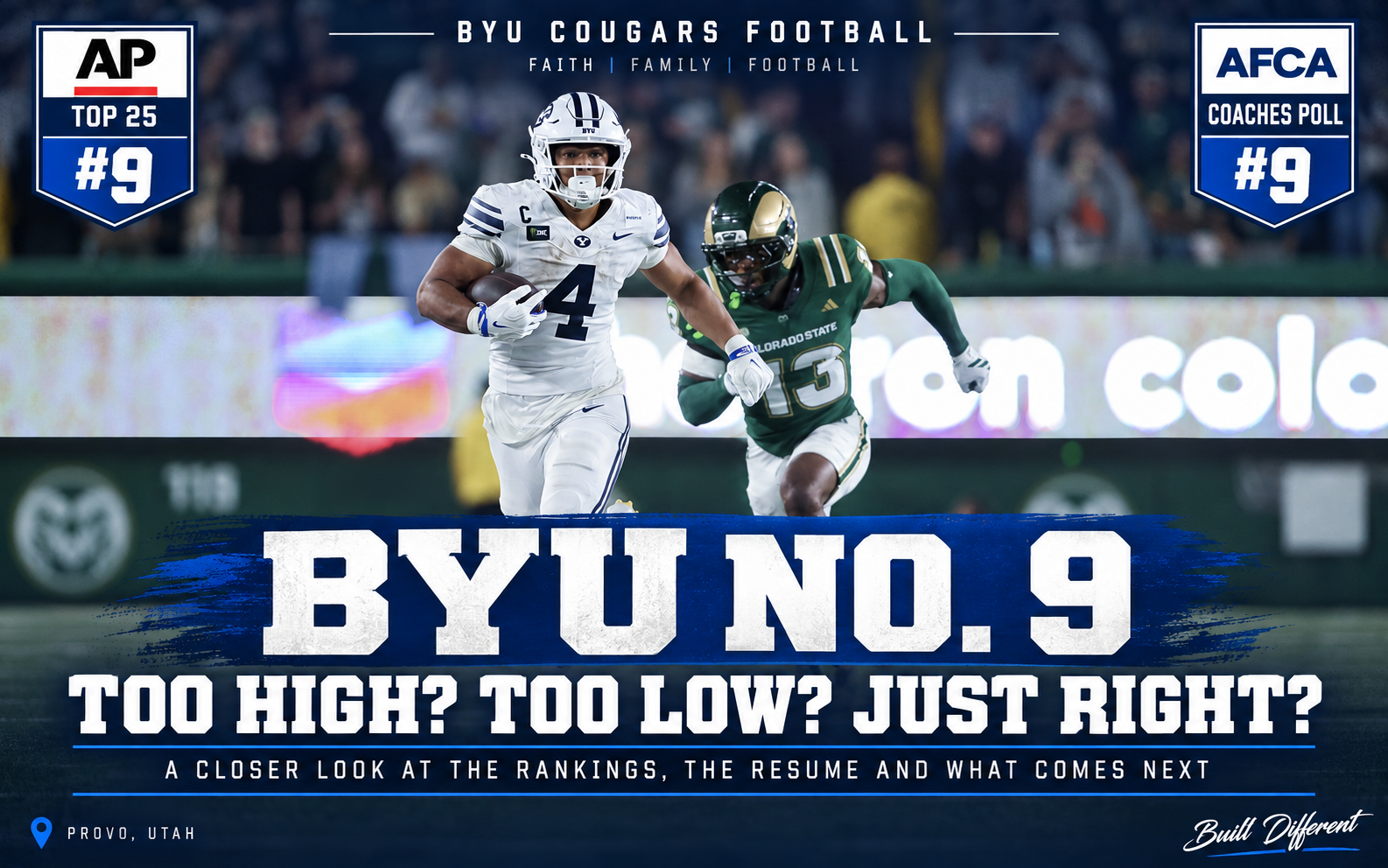 BYU Is No. 9: Too High, Too Low or Just Right?Read the original →
 How BYU moved up in today’s national polls: The votes and stats behind the jumpRead the original →
 The CFP May Get Bigger. BYU’s Standard Against Notre Dame Shouldn’tRead the original →
Questions about a source, update or correction? Contact the editor. Story updates are reflected in the published timestamp above.