
FEED THE COUGAR ORIGINAL · Football
Don’t Let the 3–2 Record Fool You: Why Iowa State Is Dangerous
Iowa State’s record is ordinary. Its explosive ceiling, road-tested offense and current form are not.
Prepared with AI assistance. Feed the Cougar is responsible for sources and corrections. How our daily articles work →
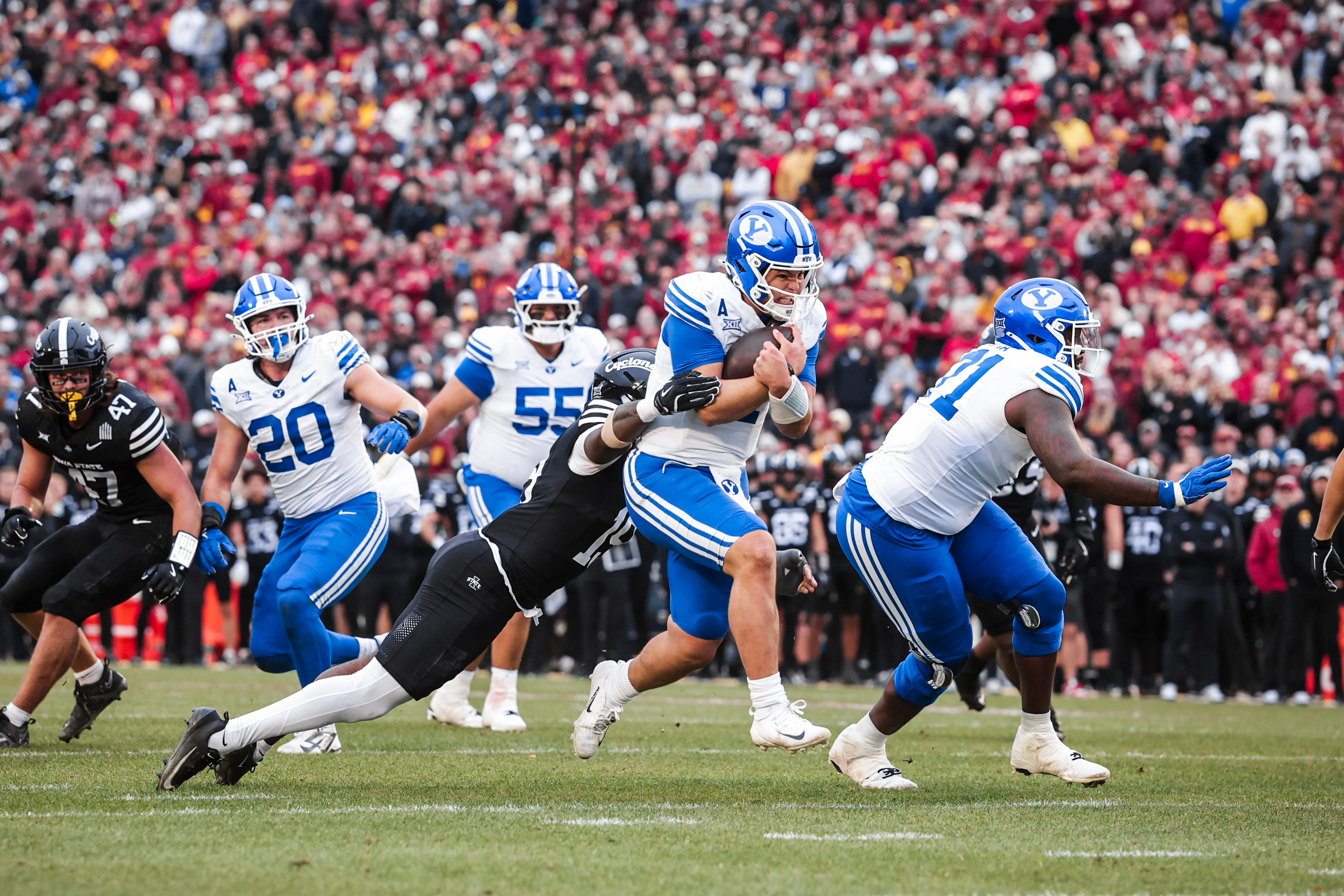
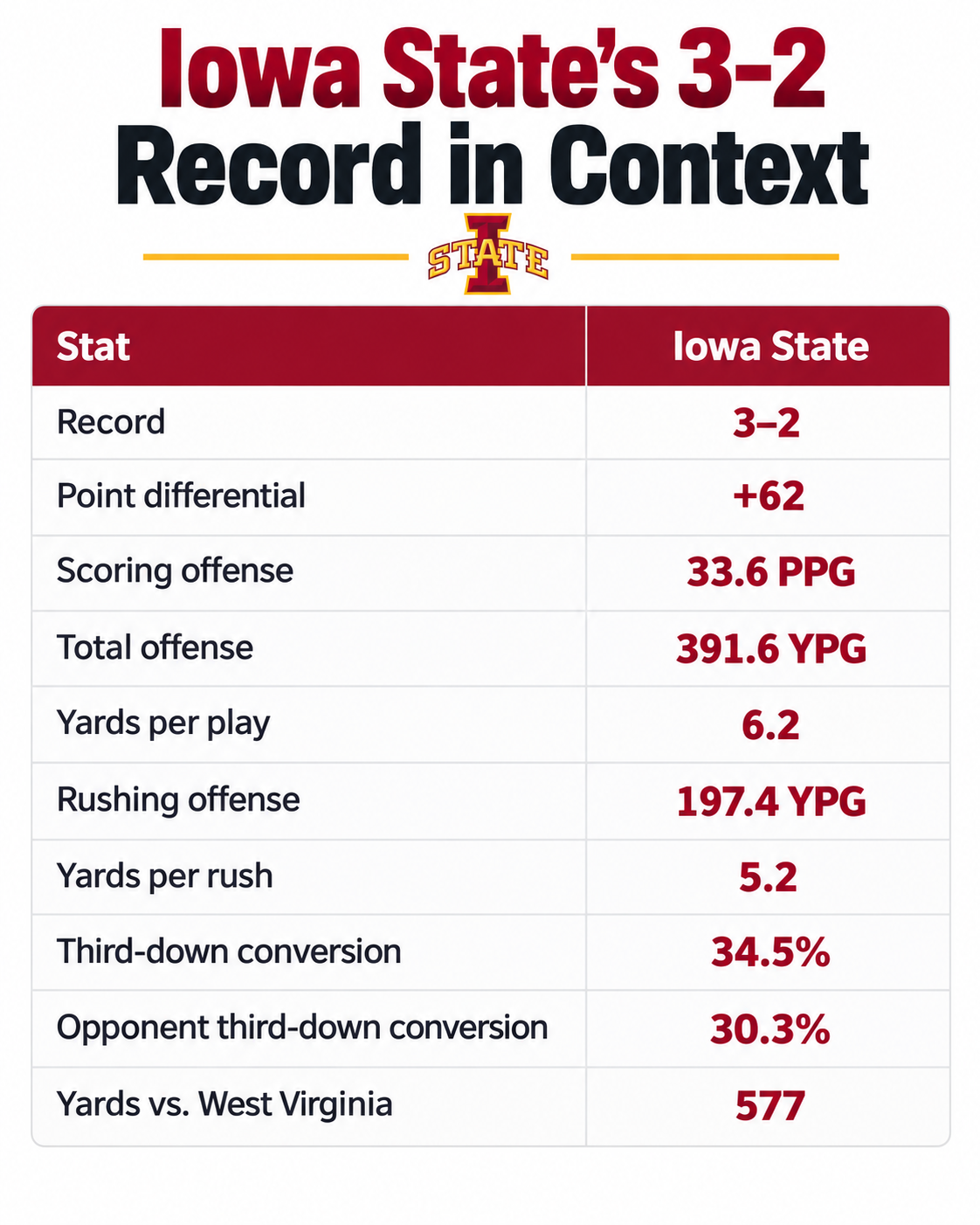
Iowa State comes to Provo at 3–2, a record that looks fairly ordinary next to No. 8 BYU’s 4–0 start. The numbers underneath that record tell a different story. The Cyclones have outscored opponents 168–106, a +62 point differential, and both losses came against ranked teams. One was a 16–13 road loss to No. 21 Iowa that was decided by a 42-yard field goal with just 15 seconds remaining.
That makes Iowa State’s record less useful than its overall efficiency. The Cyclones are averaging 391.6 yards and 33.6 points per game, while gaining 6.2 yards per play. They are averaging 197.4 rushing yards per game at 5.2 yards per carry, giving them an offense that does not have to rely exclusively on the passing game to create points.
Their ceiling showed up Saturday against West Virginia. Iowa State piled up 577 yards, including 265 rushing and 312 passing, in a 45–42 win. Aiden Flora rushed for 212 yards and three touchdowns, while the passing game averaged 10.8 yards per attempt. It was Iowa State’s third win of the season, and the Cyclones have now scored 38, 55 and 45 points in those victories.
The offense is particularly dangerous when it avoids obvious passing situations. Iowa State is converting only 34.5% of its third downs, which ranks near the bottom of the Big 12, but that weakness matters less when the Cyclones stay ahead of the chains. Through the first four games, Iowa State averaged 5.44 yards per rush on first down and 5.53 on second down. The passing game has been even more efficient on second down, completing 70.6% of its attempts for 537 yards, four touchdowns and a 181.0 passer rating.
That is where BYU’s defense can change the game. The Cougars are allowing only 75 rushing yards per game and 2.73 yards per carry, and opponents have averaged just 2.61 yards on first-down runs. BYU has also surrendered only two runs of 20 or more yards all season and none longer than 25. If the Cougars can consistently turn Iowa State’s second-and-5 situations into second-and-8, the Cyclones will eventually have to depend on that 34.5% third-down offense.
Iowa State’s 3–2 record in context
The other reason BYU should take Iowa State seriously is that the Cyclones’ two losses do not look alike. Iowa held them to 255 yards in a defensive game, but Iowa State still led 13–10 entering the fourth quarter before losing on the final field goal. Utah controlled the first half of the other loss and led 24–3, but Iowa State responded with two touchdowns and three consecutive defensive stops to cut the margin to seven before Utah finally put the game away.
There are weaknesses BYU can exploit. Iowa State’s defense is allowing 5.3 yards per play, and its run defense has been much worse after halftime, surrendering 5.04 yards per carry in the second half compared with 3.36 in the first. The third quarter has been particularly vulnerable, with opponents averaging 6.62 yards per rush. That creates an interesting contrast with a BYU rushing attack averaging 235.5 yards per game.
BYU should be favored because it has been the more complete and consistent team. The Cougars are 4–0, convert 57.4% of their third downs and have allowed only 268 total yards per game. Iowa State has already shown a much wider range of outcomes. It can be held to 13 points and 255 yards, or it can produce 577 yards and 45 points.
That is why the 3–2 record should not make BYU comfortable. If the Cougars stop the run on first down, eliminate Flora’s explosive plays and make Raynor convert third-and-long, Iowa State’s weaknesses become much easier to expose. If the Cyclones are consistently playing from second-and-4 and giving their entire offense two downs to move the chains, Friday night could become much more difficult than the records suggest.
More BYU football originals
 The CFP May Get Bigger. BYU’s Standard Against Notre Dame Shouldn’tRead the original →
 Sione Moa Is Cleared. BYU Still Has to Decide How Much He Can Give Notre DameRead the original →
 Notre Dame Has 68 Blue-Chips to BYU’s 12. The Records Are Nearly IdenticalRead the original →
Questions about a source, update or correction? Contact the editor. Story updates are reflected in the published timestamp above.