
FEED THE COUGAR ORIGINAL · Football
Efficiency Over Endurance: How BYU Flipped the Script on Arizona
BYU Cougars Football defeated Arizona Wildcats 28-17 on September 12th, 2026.
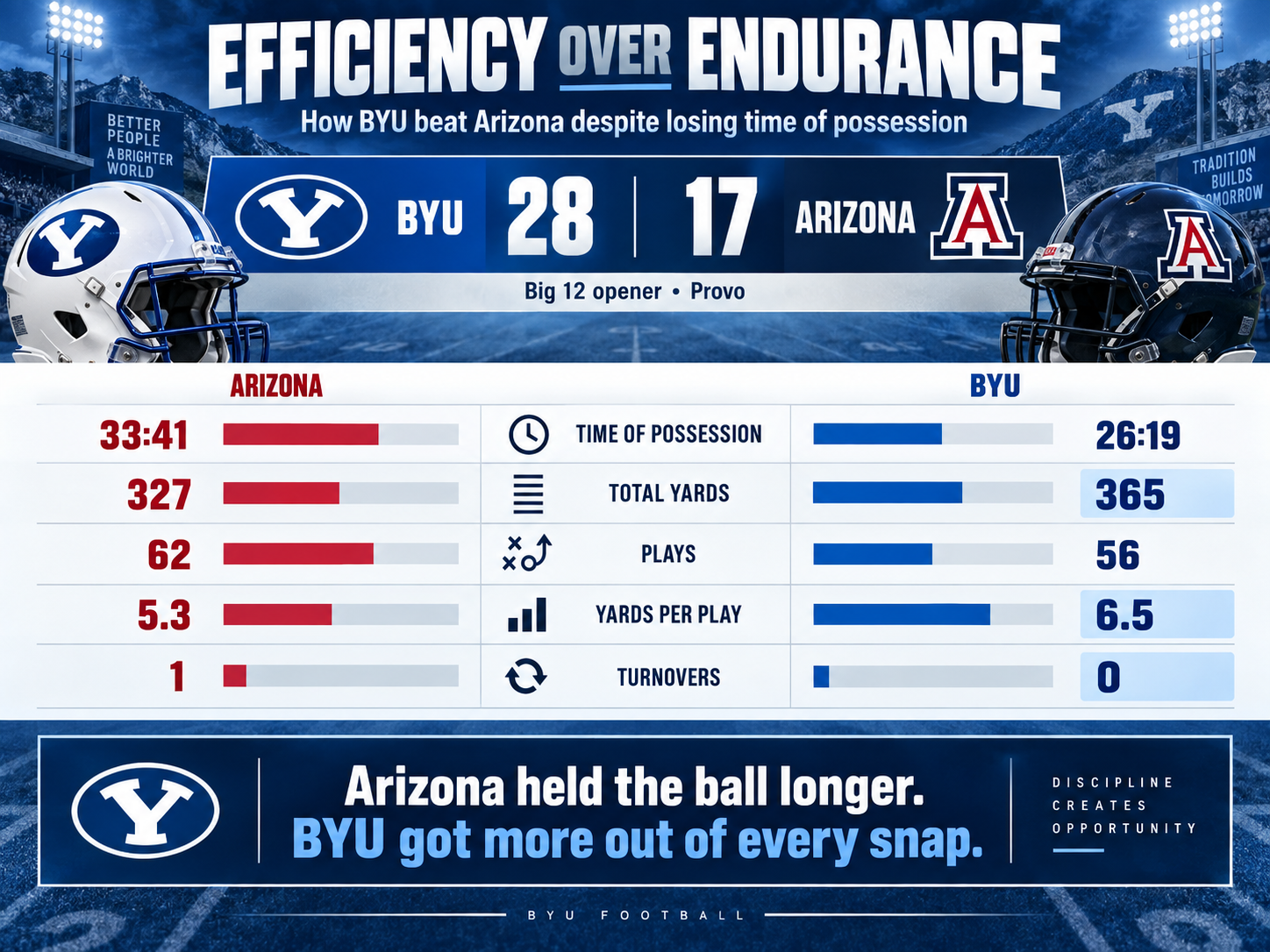
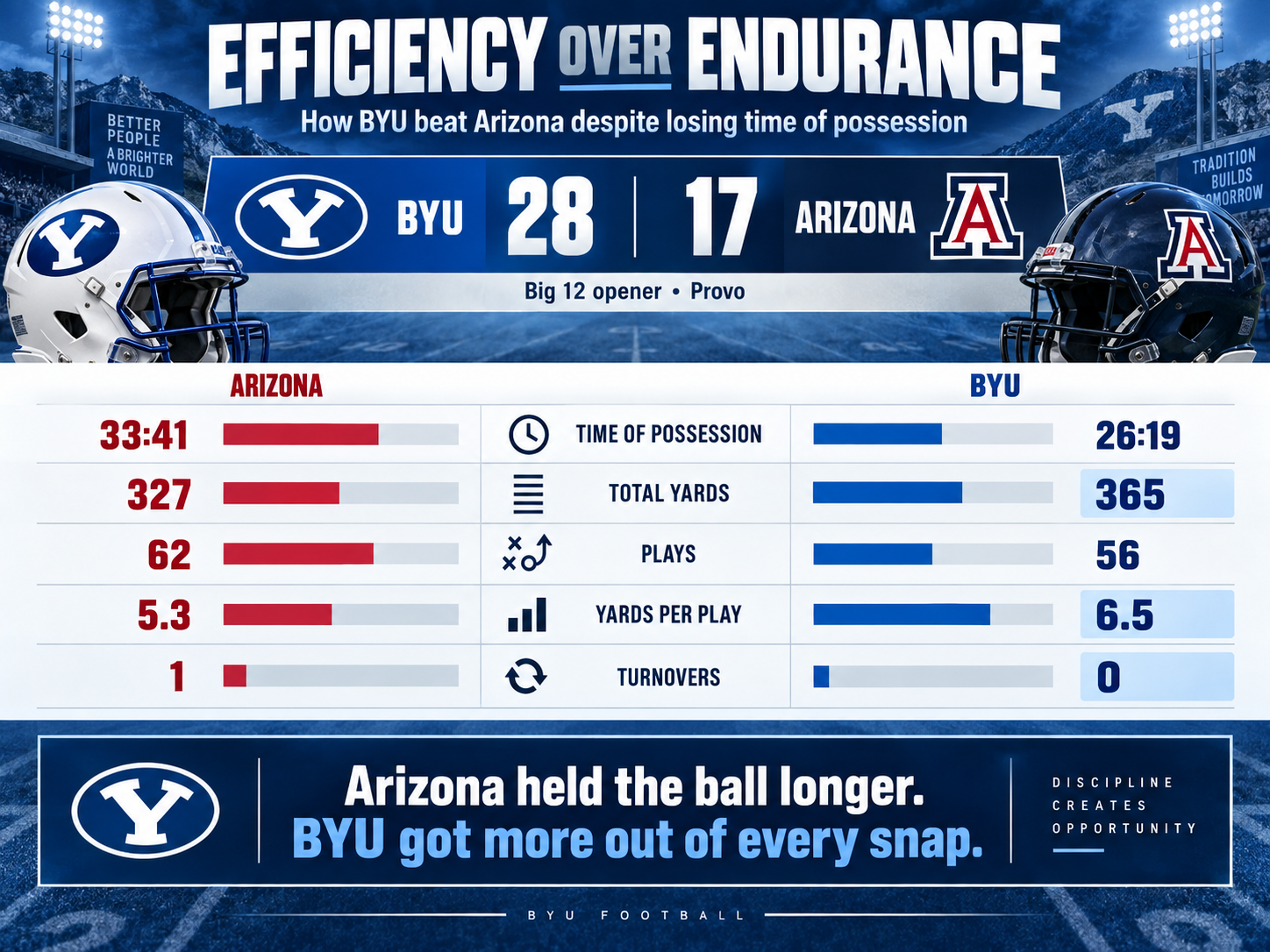
If you looked only at time of possession, total plays and the first-half scoreboard, Arizona appeared to play exactly the kind of game it wanted Saturday afternoon. The Wildcats held the football for 33:41, ran 62 offensive plays compared with BYU’s 56 and carried a 17-14 lead into halftime. Noah Fifita looked comfortable early, Arizona moved the chains consistently enough to control the tempo, and BYU spent much of the opening half reacting rather than dictating. The problem for Arizona was that possession never translated into efficiency.
BYU finished with more total offense despite possessing the ball for more than seven fewer minutes, gaining 365 yards to Arizona’s 327. The Cougars averaged 6.5 yards per play while the Wildcats managed 5.3, meaning BYU generated substantially more offense each time it snapped the football. That difference became more pronounced as the game progressed, and by the second half the statistical profile of the game had completely reversed. Arizona may have controlled the clock, but BYU controlled what happened with the football.
The game completely changed after halftime
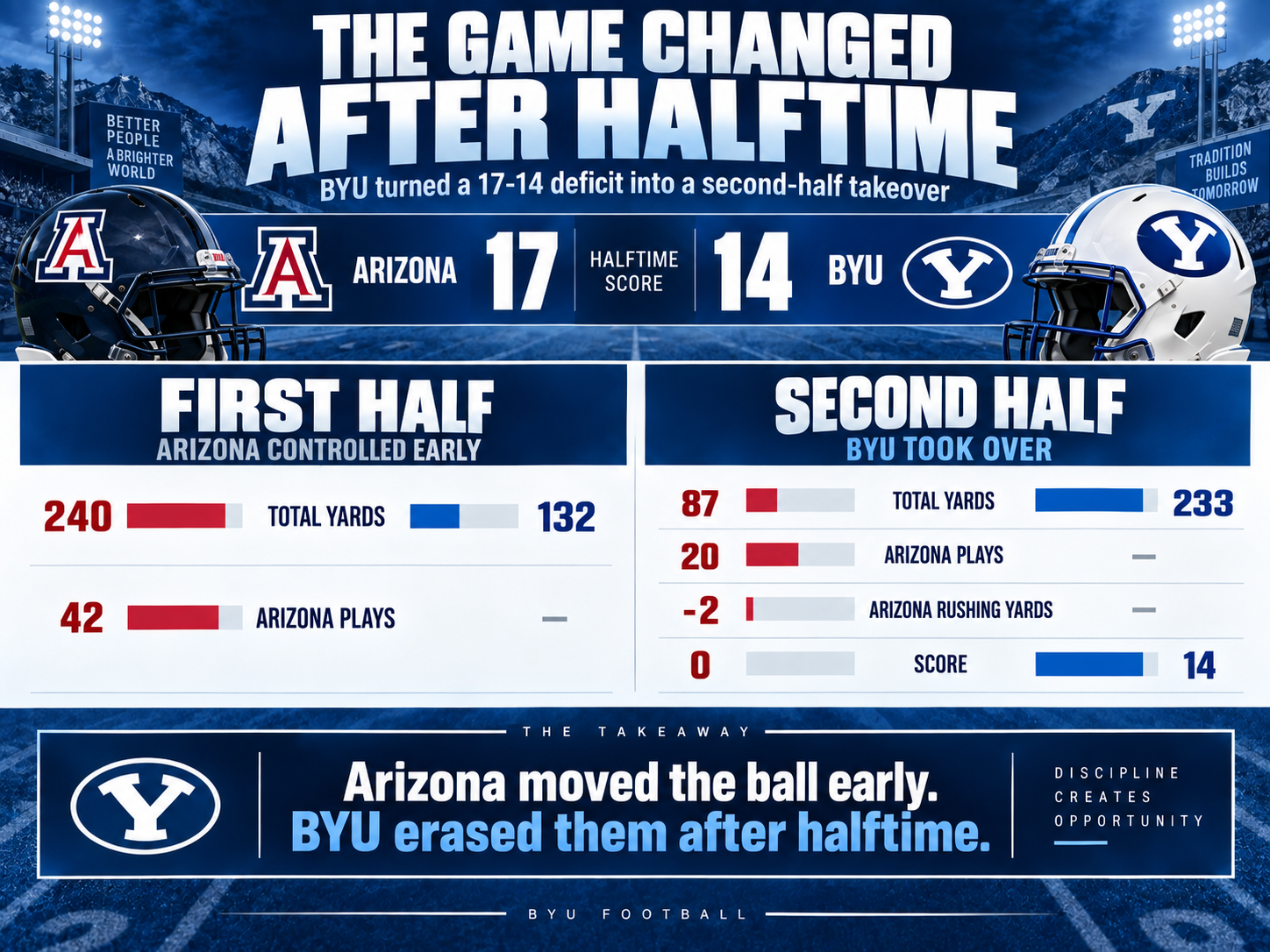
The final yardage totals make this look like a reasonably even football game. The halftime splits tell a much different story. Arizona accumulated approximately 240 yards during the first half while BYU managed only 132. The Wildcats were able to move the football through the air, maintain enough balance on the ground to keep BYU from attacking Fifita exclusively and build a 17-14 halftime advantage. Then BYU made its adjustments.
Over the final two quarters, the Cougars outgained Arizona 233-87 and outscored the Wildcats 14-0. Arizona, which had run 42 offensive plays before halftime, managed only 20 afterward. Even more remarkable was what happened to the Wildcats’ running game: Arizona finished the second half with minus-2 rushing yards.
Those numbers provide the clearest explanation for BYU’s victory. The Cougars did not simply make one or two decisive plays while Arizona continued operating normally. They fundamentally changed the way the game was being played. Arizona had 240 yards of offense in the first half and 87 in the second. BYU went from 132 to 233. That is a 101-yard improvement for the Cougar offense at the same time the defense was reducing Arizona’s output by more than 150 yards.
The most impressive part of that transformation was that BYU accomplished it against an Arizona offense that had looked perfectly capable of winning the game during the opening 30 minutes. Fifita was completing passes, Arizona was staying ahead of the chains and BYU’s defense was spending too much time on the field.
By the fourth quarter, the same offense had become almost completely one-dimensional. Arizona could no longer run the football, BYU knew Fifita had to throw, and Jay Hill’s defense could become increasingly aggressive. That is where the game was really won.
BYU turned back to LJ Martin, and the offense changed with him
One of the strangest numbers from the first half was LJ Martin’s workload. BYU gave one of its most physical offensive players only four carries before halftime, even as Arizona controlled possession and forced the Cougars into an uncomfortable offensive rhythm. That changed dramatically after the break.
Martin finished with 20 carries for 98 yards, meaning he received 16 rushing attempts during the second half alone. He also caught two passes for 27 yards, giving him 125 yards from scrimmage. As BYU committed more heavily to Martin, the entire structure of the offense improved.
The importance of Martin’s production goes beyond his final rushing total. Arizona suddenly had to respect the interior running game on nearly every snap, which helped keep BYU in manageable down-and-distance situations and created better opportunities for Bear Bachmeier in both the passing game and as a runner.
BYU finished with 148 rushing yards compared with Arizona’s 97, but even that 51-yard difference understates what happened because Arizona produced virtually nothing on the ground after halftime. The Wildcats went from having enough offensive balance to keep BYU guessing to finishing the second half at minus-2 rushing yards. Once that happened, Arizona’s offense became much easier to defend.
Martin did not need to break a 70-yard touchdown run to control the game. His value came from consistently forcing Arizona to account for the run, absorbing carries and allowing BYU to become increasingly physical as the afternoon went on.
By the fourth quarter, Arizona was dealing with Martin between the tackles, Bachmeier’s ability to escape with his legs and a BYU passing game that had suddenly begun producing explosive plays downfield. That combination ultimately became too much.
Bear Bachmeier’s impact went far beyond 217 passing yards
If the quarterback comparison is reduced to passing yardage, Noah Fifita actually finished slightly ahead of Bear Bachmeier. Fifita threw for 230 yards, while Bachmeier finished with 217. The similarities end there.
Bachmeier completed 16 of 26 passes for 217 yards, threw three touchdowns without an interception and added 37 rushing yards and another score. He was directly responsible for all four BYU touchdowns. Fifita completed 23 of 31 passes for 230 yards and a touchdown, but he also threw the game’s only interception. That difference is enormous.
BYU did not need Bachmeier to throw for 350 yards because the Cougars were getting significantly more value out of his production. Bachmeier accounted for four touchdowns, protected the football and became more effective as the game progressed.
He was especially impressive because the game did not start comfortably for him. Bachmeier threw for only 18 yards during the first quarter. Instead of allowing the slow start to snowball, he settled into the game and produced 199 passing yards over the final three quarters.
That matters because Arizona presented a much different challenge than BYU’s opener. Bachmeier had to play from behind. He had to respond after the offense struggled. He had to make throws when Arizona still had a legitimate chance to win. He did all three without giving the Wildcats a turnover.
Bachmeier also benefited from two receivers who gave BYU very different kinds of production. Kyler Kasper caught only four passes, but two went for touchdowns. His 6-foot-6 frame gave Bachmeier an obvious advantage when the field became compressed, particularly in the red zone. Kasper’s first touchdown gave BYU the lead during the opening possession of the third quarter, and his second turned a four-point game into an 11-point advantage late in the fourth. Legend Glasker supplied the explosive element.
Glasker caught three passes for 74 yards, an average of nearly 25 yards per reception, and his 61-yard catch in the fourth quarter was arguably the offensive play that broke Arizona. That play came immediately after one of the biggest defensive moments of the afternoon.
The decisive moments all belonged to BYU
Arizona trailed only 21-17 midway through the fourth quarter and drove deep into BYU territory with an opportunity to regain the lead. On fourth down, Fifita completed a short pass to Rodney Gallagher III, but BYU stopped him inches short of the line to gain. Instead of Arizona taking control of the game, BYU took possession at its own 17. Two plays later, Bachmeier found Glasker for 61 yards. Moments after that, Bachmeier connected with Kasper for a 12-yard touchdown. In a matter of minutes, Arizona went from threatening to take a late lead to trailing 28-17.
That sequence captured the difference between the two teams better than almost anything in the box score. Arizona possessed the ball longer and ran more offensive plays, but when the game reached its highest-leverage situations, BYU consistently produced the more valuable result. That pattern had actually started much earlier.
On Arizona’s second possession of the game, Cade Uluave intercepted Fifita and returned the ball near the Wildcats’ 9-yard line. Bachmeier scored two plays later, turning what could have become an early Arizona surge into a 7-7 game. BYU finished with zero turnovers. Arizona finished with one. In a game decided by 11 points, the Cougars turned the only takeaway of the afternoon directly into seven.
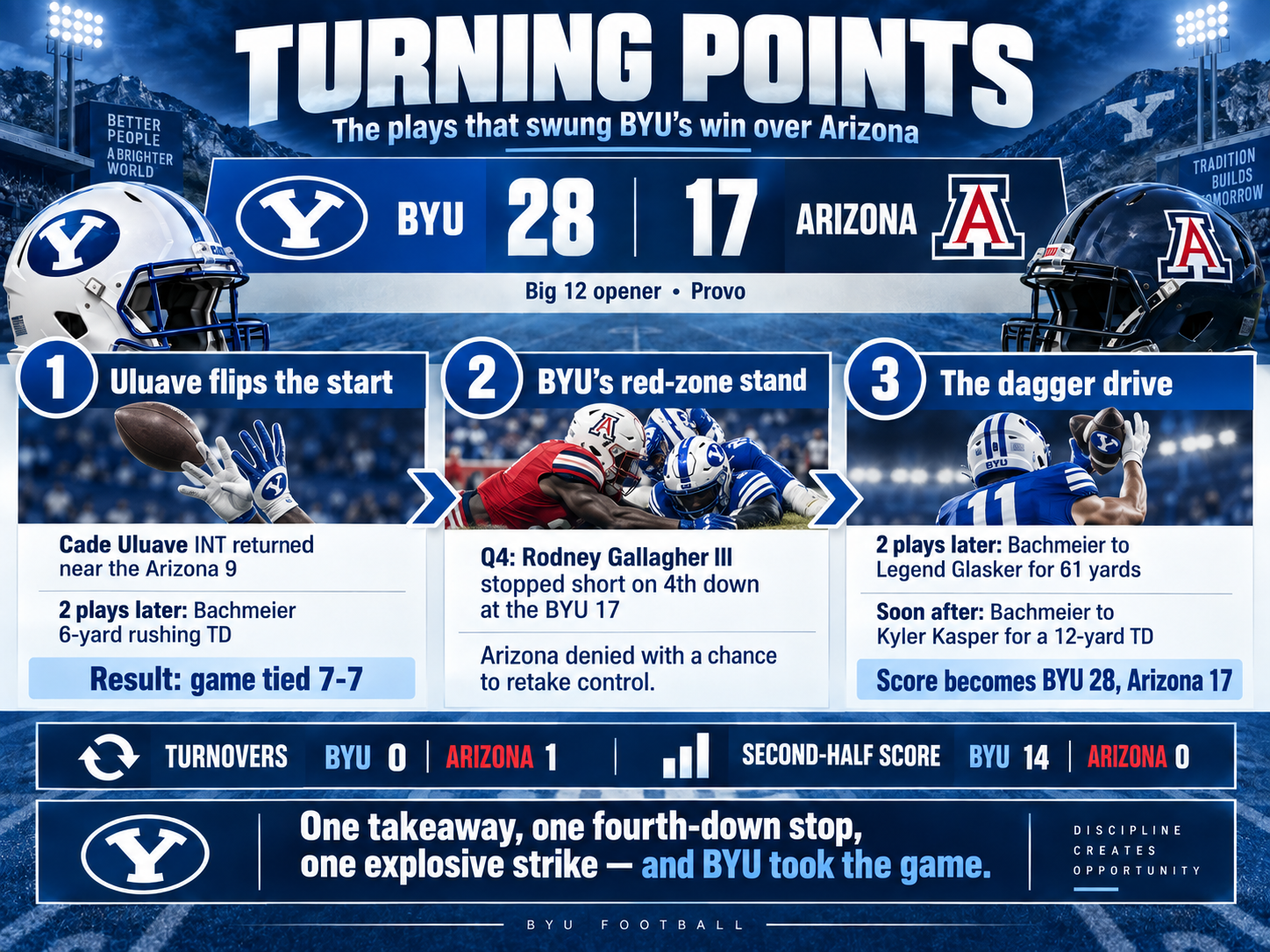
The fourth-quarter stop was just as important because it showed how thoroughly BYU’s defense had changed the game by that point. Arizona had moved the football with relative ease early, but the Wildcats were now fighting for every yard. The running game had disappeared, BYU’s front could attack Fifita more aggressively, and the Cougars were winning the downs that mattered most.
After BYU stretched the lead to 28-17, the defensive front finished the job. Tausili Akana and Keanu Tanuvasa recorded back-to-back sacks on Arizona’s next possession, and an offense that had looked dangerous early was suddenly trying simply to survive.
Arizona won possession. BYU won efficiency.
The temptation after a game like this is to look at one statistic and call it the reason BYU won. The reality is that several numbers point toward the same conclusion. Arizona possessed the ball for 33:41. BYU had it for 26:19. Arizona ran 62 plays. BYU ran 56. Yet BYU gained more total yards, 365-327, and averaged 6.5 yards per play compared with Arizona’s 5.3.
The Cougars also won the turnover battle, generated the game’s biggest explosive play, got more production from the running game and scored all 14 points after halftime. Possession tells us how long each team had the football. Efficiency tells us what happened while they had it. BYU was better in the category that mattered.
The contrast becomes even clearer when the game is separated into halves. Arizona produced 240 yards and 17 points in the first 30 minutes, then managed only 87 yards and zero points in the final 30. BYU went the other direction, producing 132 first-half yards before exploding for 233 after halftime. Those numbers make BYU’s 28-17 victory look less like a game in which the Cougars simply survived Arizona’s early push and more like a game in which they solved it.
LJ Martin became the foundation of the offense. Bachmeier protected the ball and accounted for four touchdowns. Kasper became the red-zone mismatch. Glasker produced the explosive play Arizona could not match. Uluave created the game’s only turnover, and BYU’s defense completely erased Arizona’s running game after halftime. The final score was 28-17. The most revealing number, however, might still be 87. That is all Arizona gained after halftime. For the first 30 minutes, the Wildcats looked capable of controlling the afternoon. For the final 30, BYU looked like the ranked team.
More BYU football originals
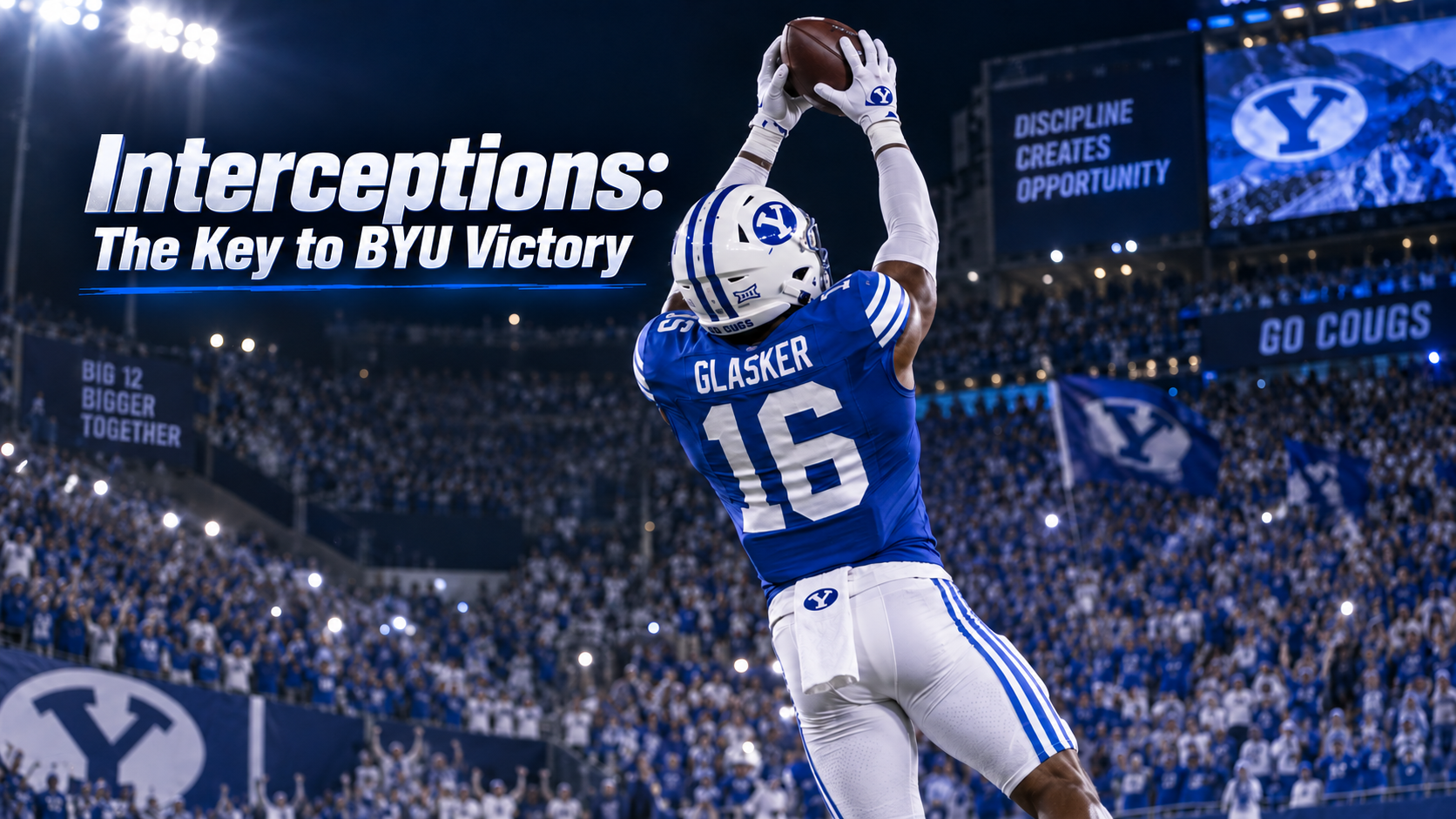 Why Interceptions Will Decide BYU vs. ArizonaRead the original →
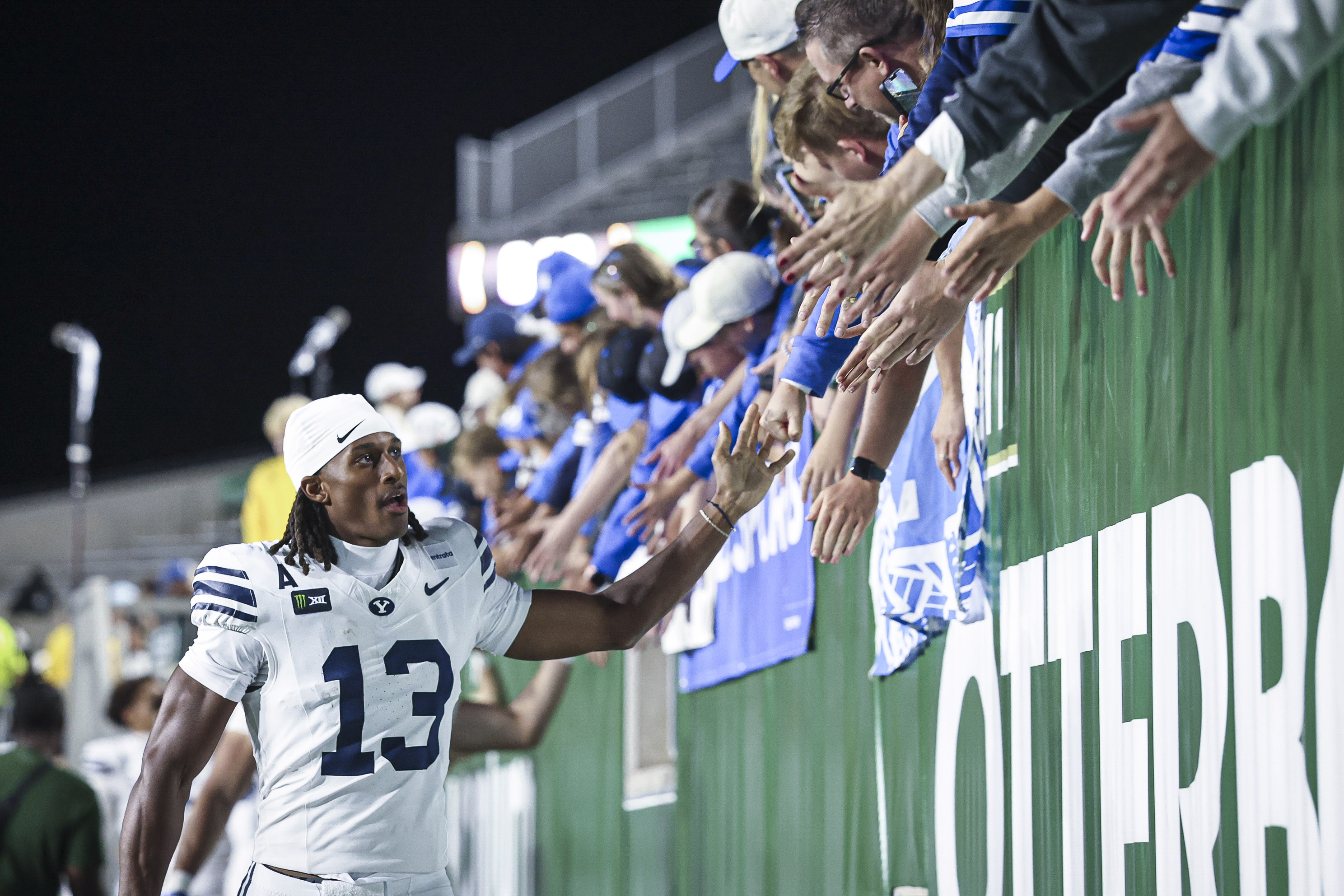 BYU’s National Ranking Resume: What Improves—and What Still Needs WorkRead the original →
 The CFP May Get Bigger. BYU’s Standard Against Notre Dame Shouldn’tRead the original →
Questions about a source, update or correction? Contact the editor. Story updates are reflected in the published timestamp above.