
FEED THE COUGAR ORIGINAL · Football
What BYU Fans Should Watch in TCU at UCF
Before TCU comes to Provo, its trip to UCF offers BYU fans a valuable scouting window. These are the numbers and matchup clues worth tracking from the couch.
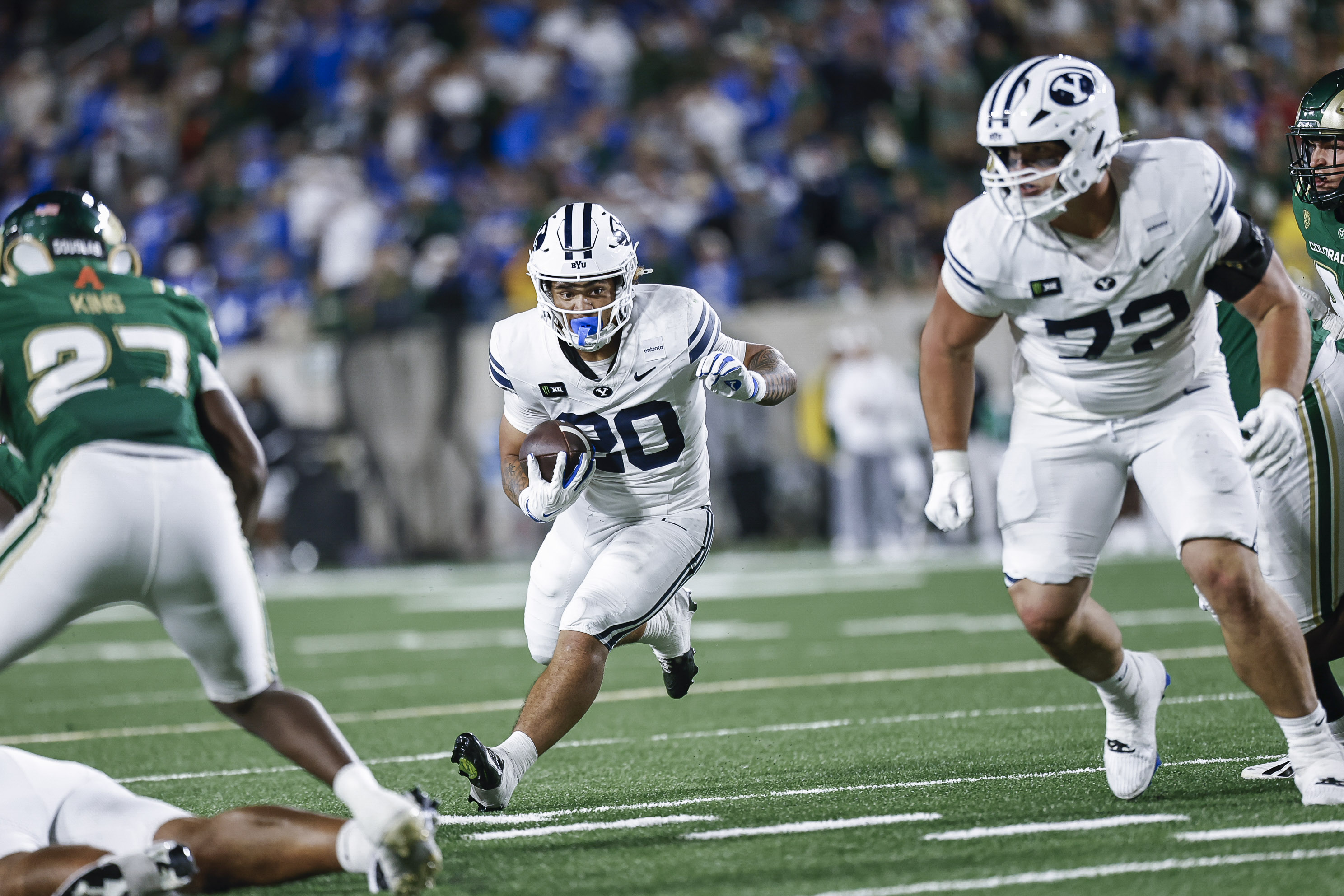
A future opponent can tell you more in a live game than it can in a preseason preview. That is why TCU’s trip to UCF matters to BYU fans. The result will be important to the teams playing it, but the film and the statistical shape of the game may be even more useful in Provo. BYU does not need to copy a game plan from the broadcast. It needs to learn which parts of TCU’s profile travel, which weaknesses UCF can stress and which numbers could become the hinge points when the Horned Frogs face the Cougars.
Start with the quarterback and the first-down offense. BYU should watch whether TCU stays ahead of the chains or repeatedly asks its quarterback to rescue third-and-long. Track early-down success, average distance to third down and how often UCF can force TCU to check the ball down. A box score may show a healthy passing total, but the down-by-down story tells BYU whether the yardage was earned inside the offense or created by late-game volume.
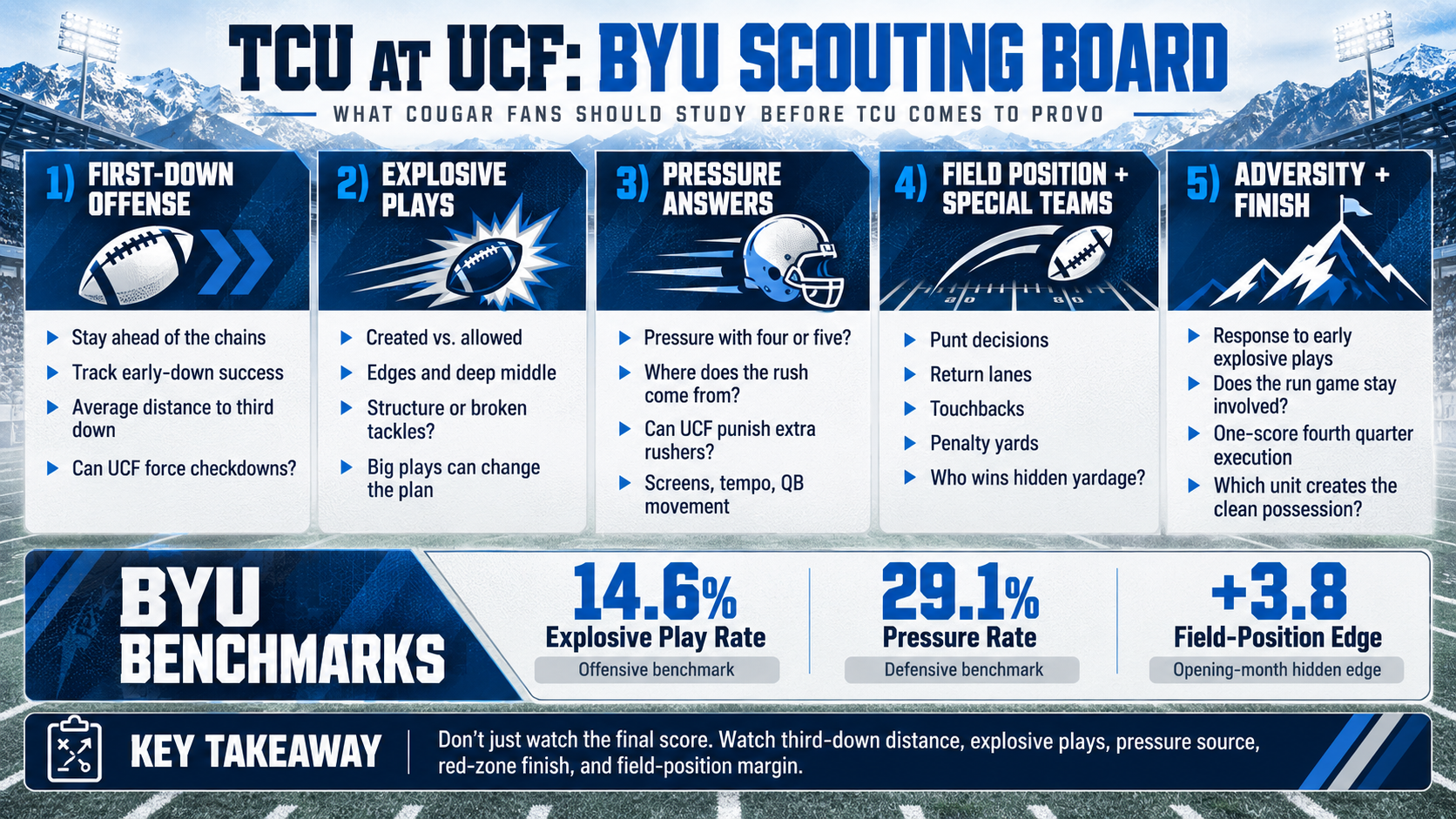
The second lens is explosive plays. BYU’s own offense is creating them at a 14.6 percent rate, so the Cougars should study whether TCU protects the edges and deep middle against UCF’s speed. Watch how many explosive gains come from structure—motion, formation or a favorable matchup—and how many come from a broken tackle. Those details matter because BYU’s defense will need to decide whether to play patiently or challenge TCU before the play develops.
The third lens is pressure. BYU’s current team board lists a 29.1 percent pressure rate, which gives the Cougars a useful benchmark for their own defense. Against UCF, watch where TCU’s pressure comes from and what happens when the first rush does not win. Does TCU bring five and leave favorable one-on-ones behind it? Does it create pressure with four? Does UCF find a way to punish the extra rusher with screens, tempo or quarterback movement? A future opponent’s pressure answers often matter more than its sack total.
Field position and special teams deserve a place in the notebook. BYU’s plus-3.8 field-position edge has been one of the quieter strengths of its opening month, and the Cougars should watch whether TCU wins or loses that same battle in Orlando. Punt decisions, return lanes, touchbacks and penalty yards can reveal whether TCU is comfortable playing from behind the 25. They also reveal how much pressure a defense is carrying before the offense ever takes the field.
Finally, watch how TCU handles adversity. If UCF lands an early explosive play, does TCU change coverage or stay disciplined? If TCU falls behind, does the run game remain part of the plan? If the game reaches the fourth quarter within one score, which unit creates the cleaner possession? BYU fans should resist the temptation to judge TCU from one quarter or one final margin. The scouting value is in the sequence of answers.
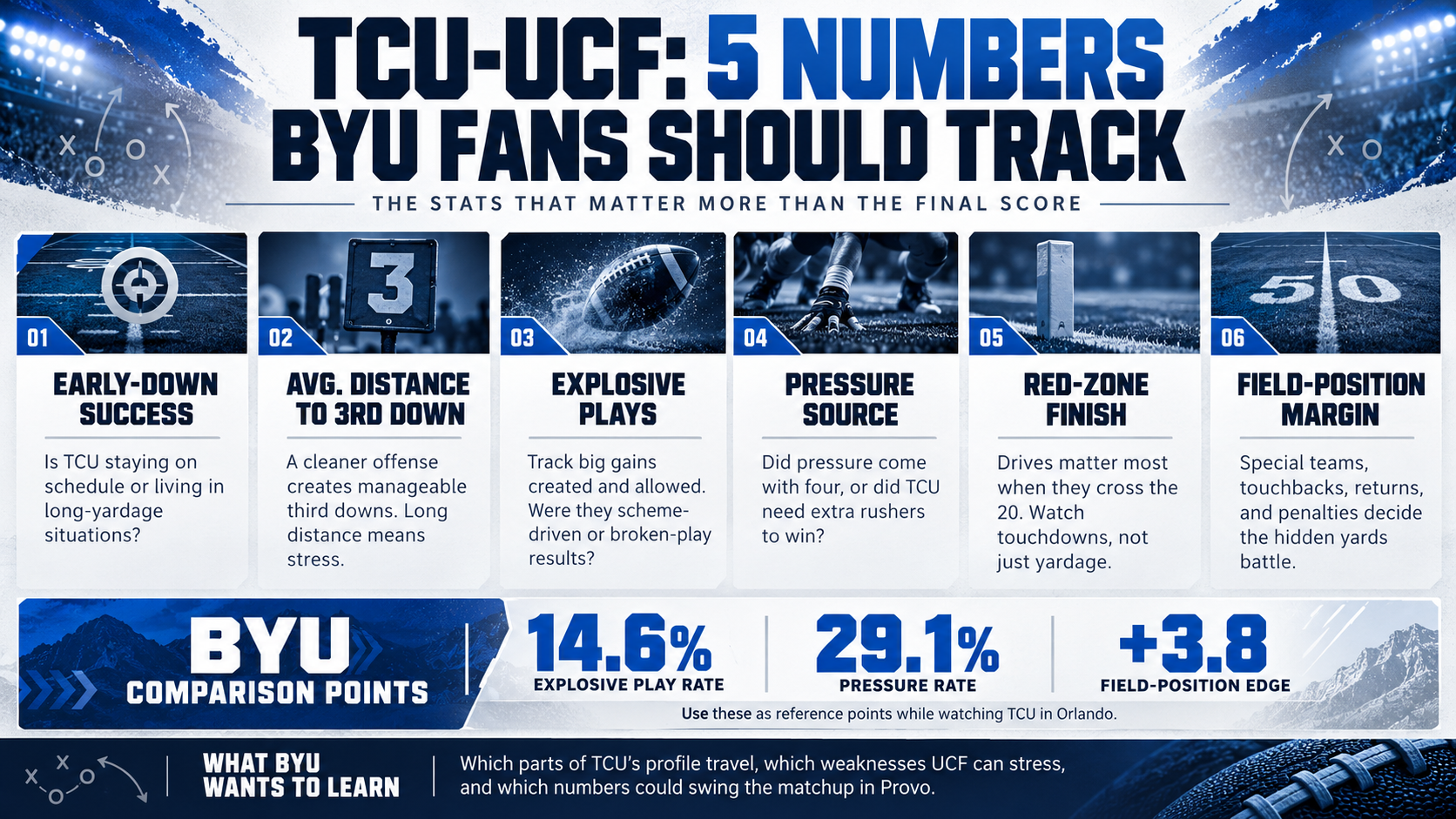
This is not a prediction article disguised as a scouting report. It is a way to turn one weekend game into information for the next BYU week. By the final whistle, the useful notes will be simple: TCU’s third-down distance, explosive plays created and allowed, pressure source, red-zone finish and field-position margin. Those numbers will not replace the film, but they will tell BYU fans where to look when TCU’s game reaches the Ranking Room and the Cougars’ own matchup plan comes into focus.
More BYU football originals
 Did TCU Just Get Exposed?Read the original →
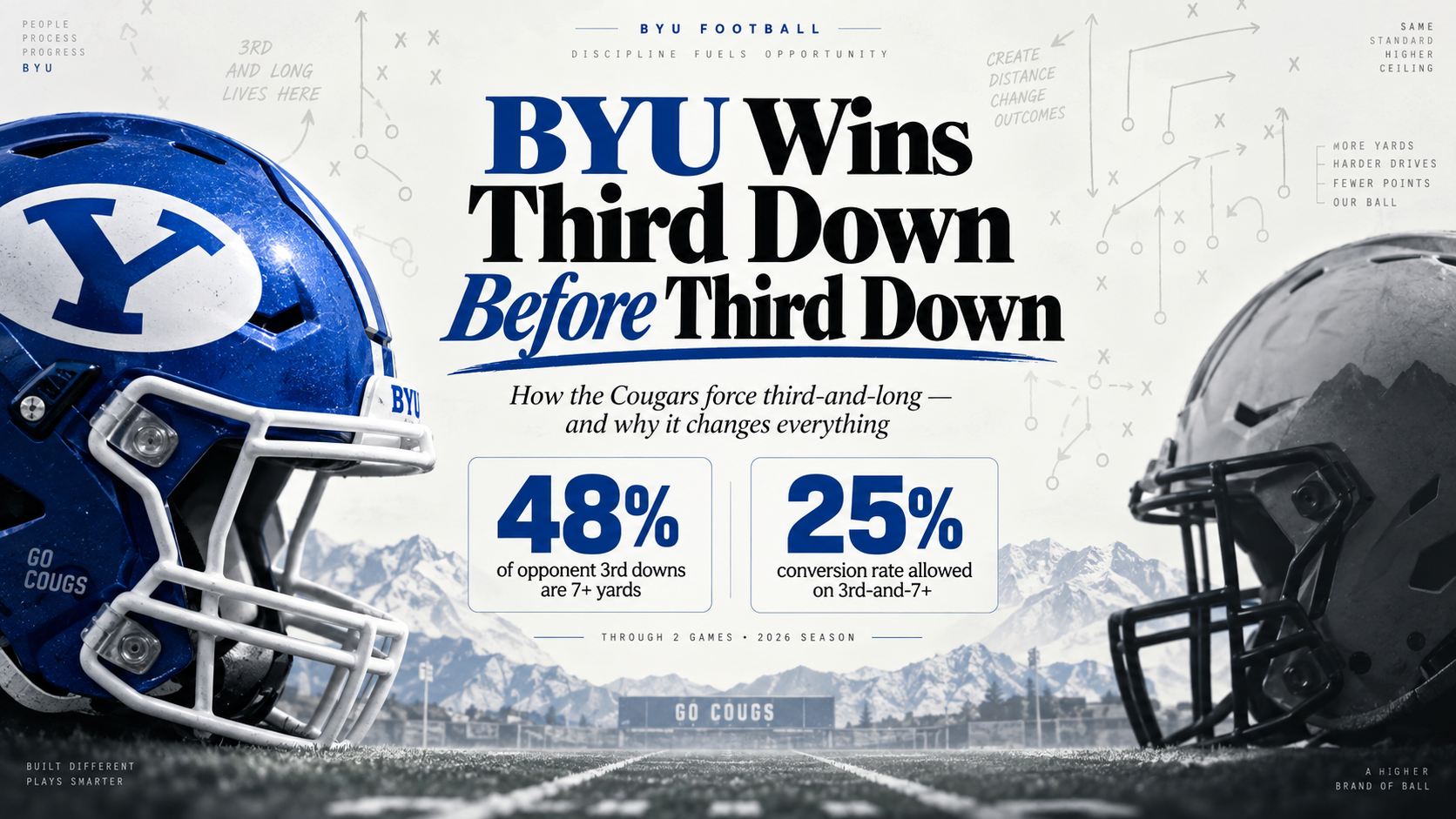 Why 3rd-and-Long Is Fueling BYU’s Defensive SuccessRead the original →
 The CFP May Get Bigger. BYU’s Standard Against Notre Dame Shouldn’tRead the original →
Questions about a source, update or correction? Contact the editor. Story updates are reflected in the published timestamp above.